
Description
Desert henbane (lat. Hyoscyamus desertorum) is a herbaceous plant belonging to the Solanaceae family. While not a conventional staple crop, it is cultivated as a specialty medicinal plant due to the high concentration of bioactive compounds found in its tissues.
This species is native to the arid regions of Central Asia and the Middle East. It has evolved to thrive in harsh, desert-like environments, including stony soils and sandy plains. Agricultural cultivation is typically restricted to controlled plots that mimic the dry, high-sunlight conditions of its natural habitat, ensuring the quality of the pharmacological raw material.
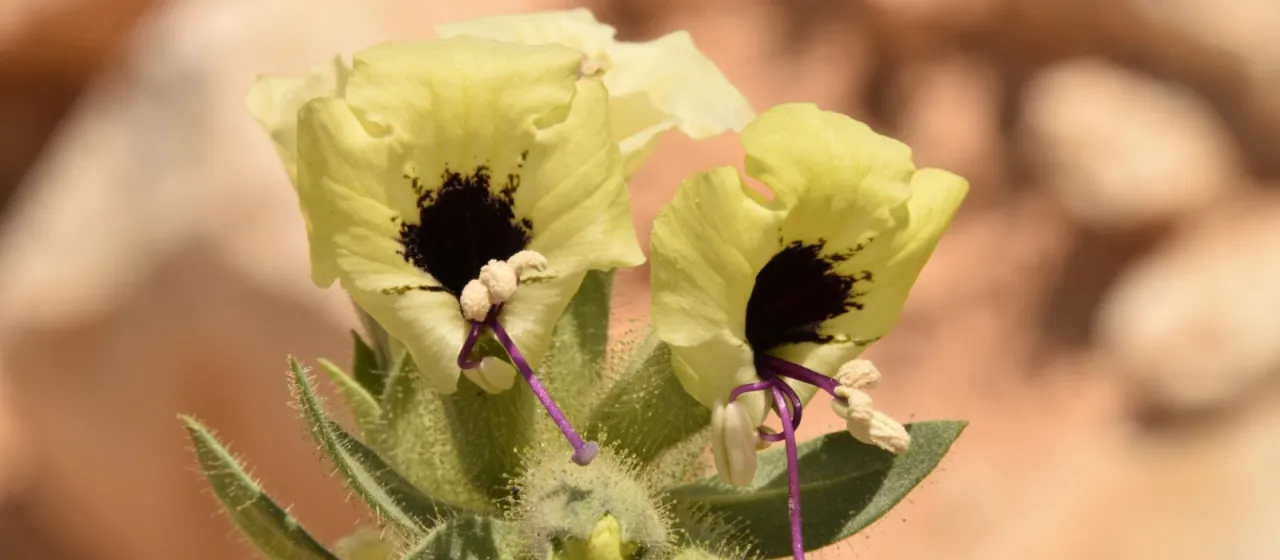
Botanically, the desert henbane is distinguished by a deep taproot system designed to access scarce groundwater. The plant features stems with sticky, glandular hairs that act as a moisture-retaining mechanism. Its leaves are structurally adapted to prevent dehydration, and its flowers exhibit the classic, bell-shaped structure typical of the Hyoscyamus genus.
Climatic requirements are rigorous, with the plant needing intense solar radiation and minimal humidity. Ideal soil conditions include sandy, well-draining substrates with low organic content. High levels of fertilizers are generally avoided, as they can interfere with the metabolic pathways that produce the plant's essential alkaloids. Field management focuses on weed suppression and precise water management during the early growth stages.
The primary use of desert henbane is medicinal, specifically as a source for antispasmodic compounds in modern medicine. Due to the presence of potent toxic alkaloids, the plant must be handled with extreme care. Harvesting, drying, and extraction processes are strictly regulated by pharmaceutical standards to ensure safety and potency of the final medicinal products.
- Extreme drought tolerance.
- High alkaloid content for pharmaceuticals.
- Adaptation to saline and sandy soils.
- Minimal requirements for soil fertilization.