
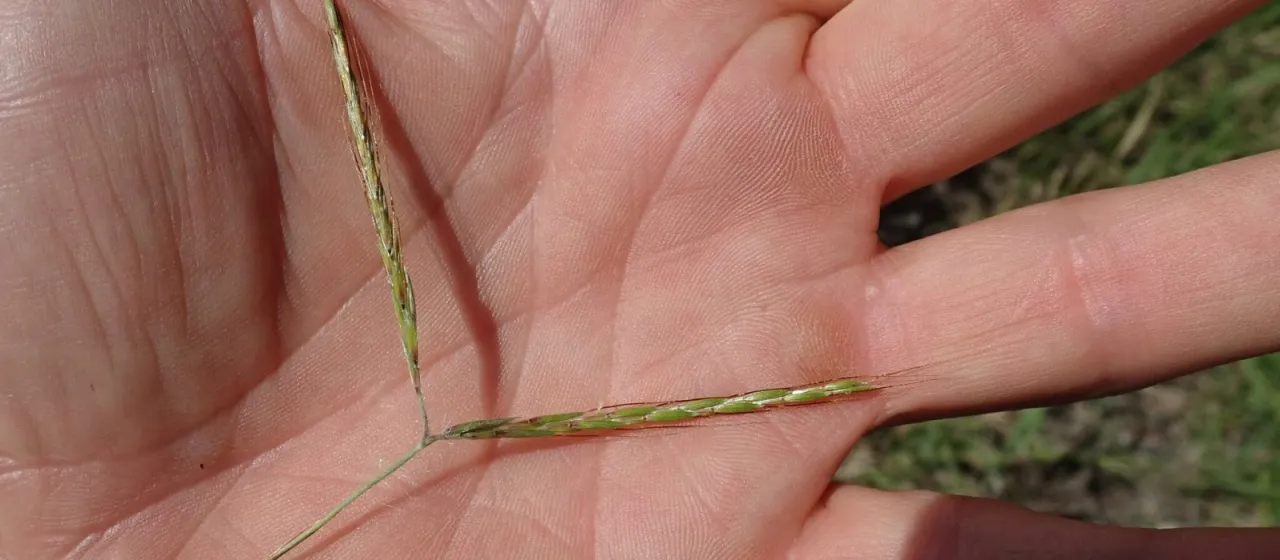
Description
Hyparrhenia sinaica is a perennial herbaceous plant belonging to the Poaceae family. This species is a specialized member of the Hyparrhenia genus, historically adapted to arid and semi-arid climates, demonstrating remarkable resilience to water scarcity and high-temperature stress.
The natural distribution of this crop is concentrated in the Middle East and North Africa, specifically the Sinai Peninsula, which inspired its specific epithet. The plant is well-adapted to rocky and sandy substrates typical of desert and semi-desert zones, where other grass species struggle to maintain vegetative growth during extreme summer heat.
Botanically, the plant is characterized by a robust root system capable of penetrating significant depths to access subterranean moisture. The culms are upright, often forming dense tussocks that help conserve soil moisture in the root zone. The leaves are rigid and covered with fine hairs, an adaptation that significantly reduces the transpiration rate during dry periods.
For successful cultivation, this species requires well-drained, predominantly sandy or rocky soils. The plant is highly light-demanding and does not tolerate shading. While it does not require an intensive fertilization regime, it is highly sensitive to waterlogging, which can easily lead to root rot in heavy clay or poorly draining soils.
The primary agricultural use of Hyparrhenia sinaica is as a range resource in water-limited areas. Due to its hardiness, it serves as a valuable reserve fodder source for small ruminants during peak drought periods when most annual grasses have withered. Common diseases include rust fungi, which may appear during periods of high humidity, while the most prevalent pests are various species of grain flies.