
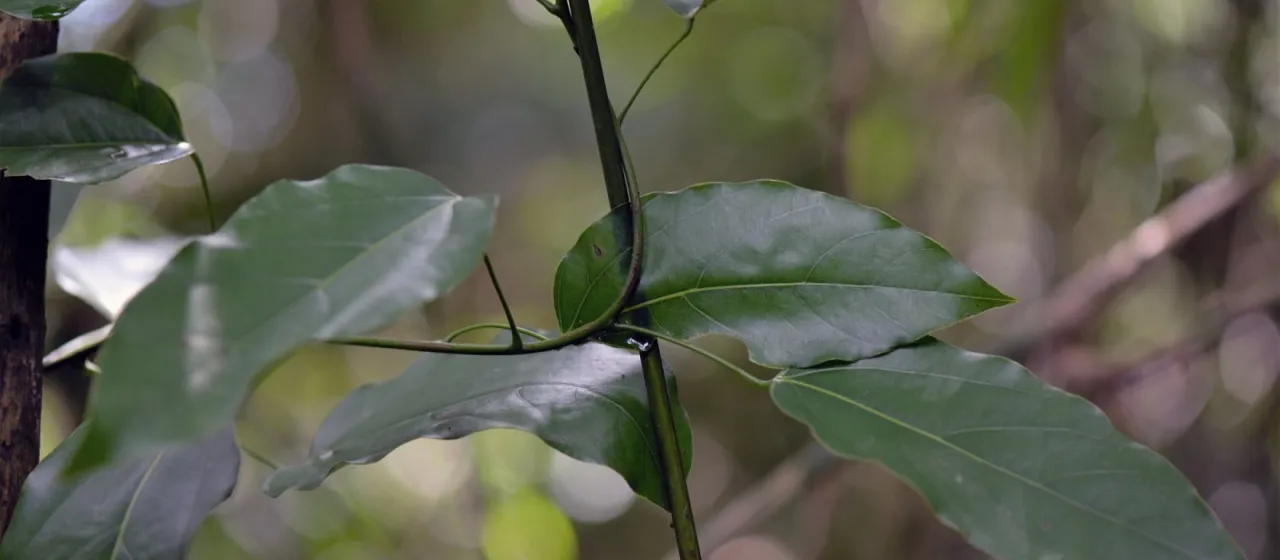
Description
Hyperbaena domingensis is a distinct botanical species belonging to the Menispermaceae family. This plant typically manifests as a climbing woody vine or shrub, exhibiting growth habits consistent with tropical forest understory vegetation. Its structural biology allows it to thrive in dense, shaded environments where it competes for light by climbing surrounding flora.
The species is native to the Caribbean region and parts of Central America. Its natural habitat is defined by tropical climates with high humidity and consistent rainfall patterns throughout the year. Due to its specific ecological requirements, its cultivation is largely restricted to botanical gardens and specialized conservation nurseries rather than broad-scale agricultural production.
Morphologically, the plant features alternate, leathery leaves and small flowers that give rise to drupe-like fruits. The root system is relatively shallow, adapted to the nutrient-rich leaf litter of forest soils. The plant relies on its ability to effectively capture filtered light, making it a highly specialized organism within its native ecosystem.
Successful cultivation of Hyperbaena domingensis requires careful attention to environmental parameters. It demands a stable tropical climate, avoiding any significant drop in temperature. Soil requirements include a well-draining, organic-rich substrate that maintains moisture without becoming waterlogged. Providing a support structure is essential for the plant to achieve its potential vegetative mass.
Current agricultural and research interest in this species lies in its biochemical potential, as many Menispermaceae species are known for their alkaloid profiles. Growers must remain vigilant against common pests such as spider mites and scale insects, while proper air circulation is the primary defense against fungal pathogens that can affect the root zone and foliage.