
Description
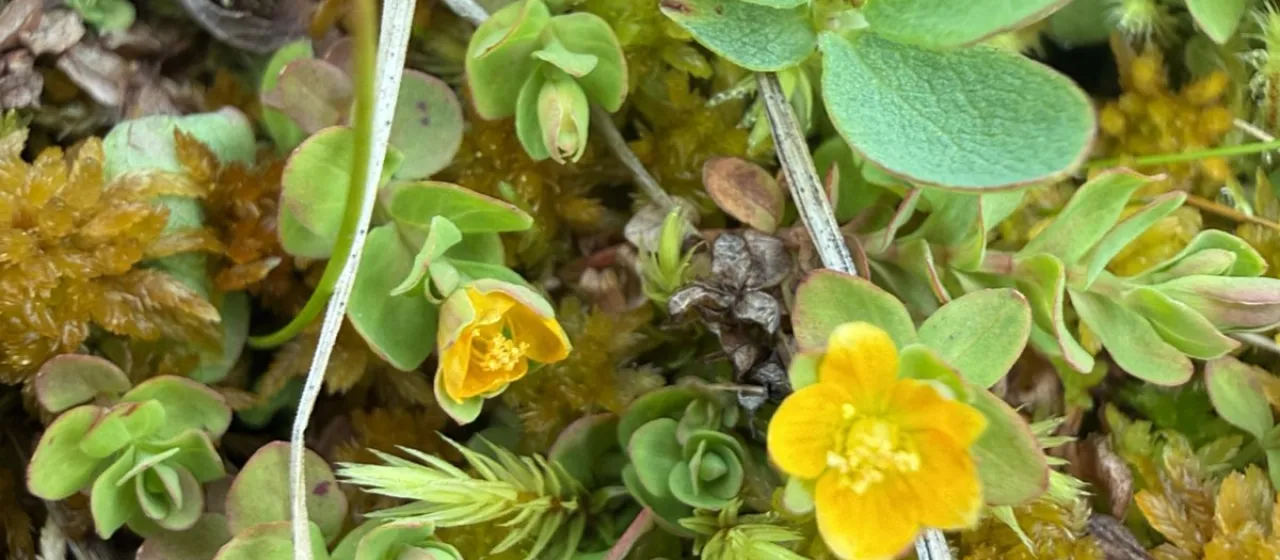
Bog St. John's wort (Hypericum anagalloides) is a perennial herbaceous plant belonging to the Hypericaceae family. Unlike its more common upright relatives, this species is characterized by its prostrate, mat-forming growth habit, making it an excellent candidate for groundcover in specialized wet environments.
The plant is native to Western North America, where it thrives in moist habitats such as stream banks, meadows, and subalpine wetlands. Its range is confined to areas with consistent moisture, and it is rarely found in regions prone to long periods of drought or excessive heat, which inhibit its natural development.
Botanically, the plant features small, opposite, elliptical leaves on delicate stems. Its flowers are characteristically yellow but relatively small compared to other members of the Hypericum genus. The root system is shallow but dense, allowing the plant to creep along the surface and stabilize damp soils effectively through vegetative expansion.
The agronomy of this species requires a focus on soil moisture management. It grows best in acidic, peat-rich, or loamy soils that remain damp throughout the growing season. While it can tolerate partial shade, it requires good indirect light to maintain its color. Irrigation management is the most critical aspect of its care, as the plant cannot survive soil desiccation.
The primary use of this crop is in ornamental horticulture, specifically for ecological landscape design and wetland restoration. It is not typically grown for medicinal or large-scale agricultural purposes. Common issues include root rot caused by poor water drainage in enclosed containers and potential infestations of spider mites if ambient humidity drops too low during hot spells.