
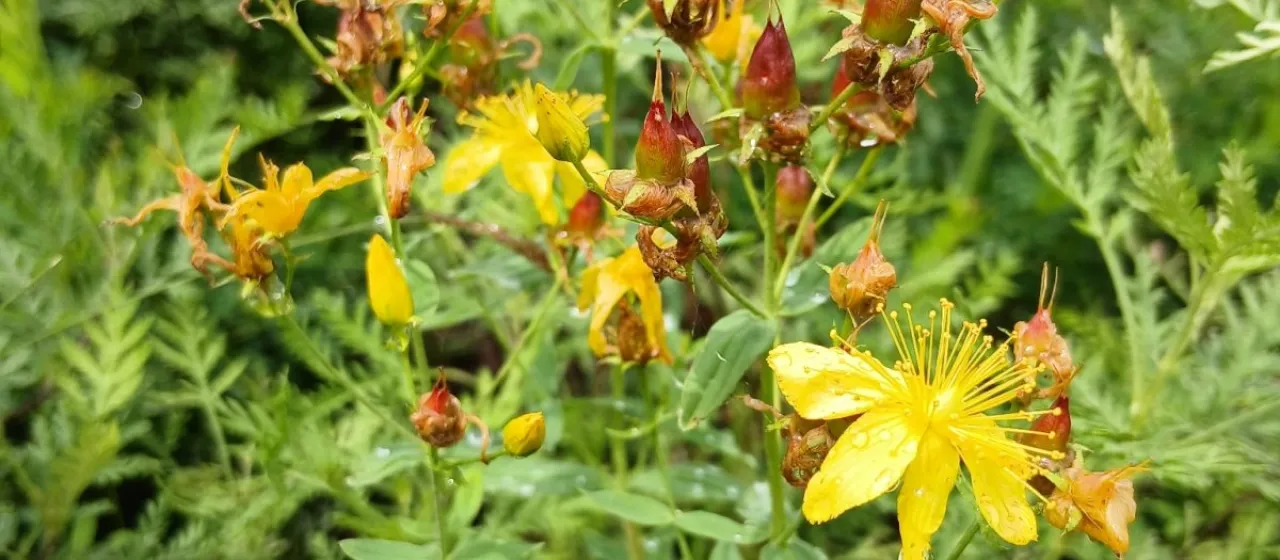
Description
Attenuate St. John's wort (Hypericum attenuatum) is a perennial herbaceous plant belonging to the Hypericaceae family. It is recognized as a significant medicinal crop, highly valued for its concentration of hypericin and other secondary metabolites which are widely utilized in the pharmaceutical industry.
The origin of the species is linked to the territories of East Asia, including China, Japan, and the Russian Far East. It naturally occurs in open habitats such as meadows, mountain slopes, and forest edges, which dictates its preference for sufficient sunlight and moderate soil moisture levels throughout the growing season.
Botanically, the plant is characterized by erect stems reaching heights of 50 to 60 cm and distinct lanceolate leaves that are attenuated (tapered) at the tips. The bright yellow flowers are organized into corymbose inflorescences, featuring black secretory glands on the petal margins that serve as a diagnostic marker for the species.
Cultivation requires well-drained, fertile soil with a neutral to slightly acidic pH level. The plant is drought-tolerant once established, but optimal yield is achieved under conditions of consistent soil moisture and high solar radiation. Seed propagation is standard, with cold stratification typically recommended to improve germination rates in spring-sown crops.
The primary agricultural use is the harvesting of the aerial parts (stems, leaves, and flowers) during the peak flowering stage. Proper post-harvest handling, including drying in well-ventilated areas, is critical to preserve the pharmacological properties of the raw material. Vigilance against fungal pathogens, such as rust and powdery mildew, is essential for maintaining plant health and commercial yield quality.