
Description
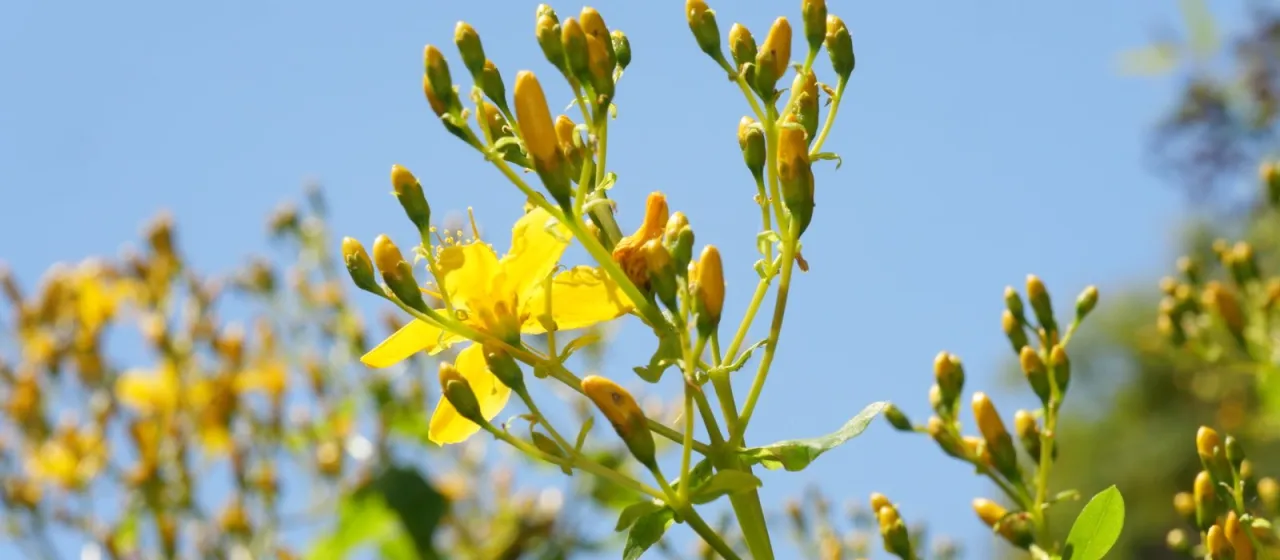
Canary Island St. John's wort (Hypericum canariense) is a distinctive woody shrub belonging to the Hypericaceae family. Unlike many other members of the genus that are herbaceous, this species develops into a substantial, evergreen bush, reaching significant heights and providing a long-lasting display of yellow blossoms in temperate and subtropical landscapes.
The plant is endemic to the Canary Islands, thriving in rocky environments and cliffside habitats. Its natural distribution is a testament to its resilience, as it is evolved to withstand strong coastal winds, intense UV exposure, and periodic water scarcity. These traits make it a fascinating subject for both botanists and professional gardeners working in Mediterranean climates.
Biologically, the plant is characterized by its opposite, leathery leaves and terminal clusters of bright yellow, five-petaled flowers. The plant's morphology allows it to minimize moisture loss, featuring a robust root system and specialized leaf structures that thrive in well-drained, nutrient-poor volcanic soils, common in its native habitat.
Agronomic requirements emphasize the necessity of high light intensity and exceptional drainage. In cultivation, the plant requires a full sun location and a gritty, porous substrate to prevent root rot. It is not frost-tolerant and should be treated as a container plant in cooler climates, moved indoors during winter months to ensure survival.
The economic and practical usage of this species includes:
- Ornamental horticulture for xeriscaping and drought-tolerant gardens.
- Integration into urban landscaping to reduce irrigation needs.
- Research into chemical compounds for potential therapeutic applications.
- Use in erosion control for sandy, unstable slopes in coastal areas.
Regarding health management, the plant is relatively hardy but can be susceptible to soil-borne fungi if overwatered. Common pests include aphids and scale insects, particularly when grown in sheltered, low-airflow environments. Regular inspection and maintaining appropriate humidity levels are the primary methods for ensuring a healthy crop.