
Description
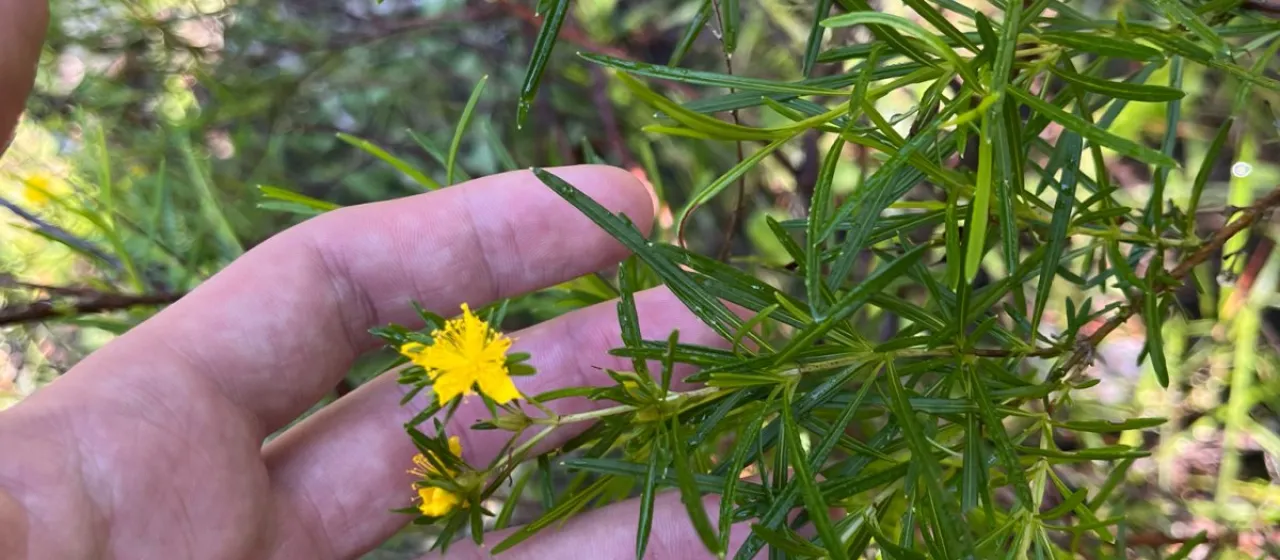
Dense-flowered St. John's wort (Hypericum densiflorum) is a hardy perennial shrub belonging to the Hypericaceae family. It is widely recognized for its dense branching habit and profuse display of golden-yellow flowers, making it a staple in ornamental plant nurseries and professional landscaping projects.
The species is native to North America, primarily distributed across the eastern United States. It naturally thrives in diverse habitats ranging from moist meadows and stream banks to open pine barrens. This historical adaptation to varied moisture levels gives the plant high resilience when cultivated in managed garden environments.
Botanically, Hypericum densiflorum is characterized by its woody stems that can grow between 1 to 5 feet tall. Its leaves are linear, narrow, and persistent or semi-evergreen depending on the local climate. The flowers, appearing in dense terminal clusters, are a hallmark of the species, offering a striking visual impact during mid-to-late summer.
Cultivation requirements involve selecting a location with full sun to partial shade. The soil should be well-drained but capable of retaining sufficient moisture to support vigorous growth. While the plant is hardy in USDA zones 5 through 8, it requires consistent moisture during establishment. Pruning is essential for maintaining a dense structure and preventing the plant from becoming overly leggy.
In terms of usage, it is highly favored for mass planting, borders, and as a naturalistic addition to wildflower gardens. It also provides a significant nectar source for local pollinators. Common challenges include susceptibility to rust fungi and potential infestations of aphids or spider mites, which can be managed through standard integrated pest management practices and proper site selection to ensure good airflow.