
Description
Heather-leaved St. John's wort (lat. Hypericum ericoides) is a perennial subshrub belonging to the Hypericaceae family. Distinguished by its unique, heather-like foliage, this plant is a specialized member of the St. John's wort genus. Its evolutionary adaptation makes it a fascinating subject for both botanical research and professional herbal crop production.
The plant originates from the Mediterranean region, with its natural range extending across Spain and Northern Africa. It typically thrives in arid, rocky environments and limestone-rich soils. Due to its historical development in such challenging terrain, the species is remarkably drought-resistant and is well-suited for cultivation in dry-climate farming zones.
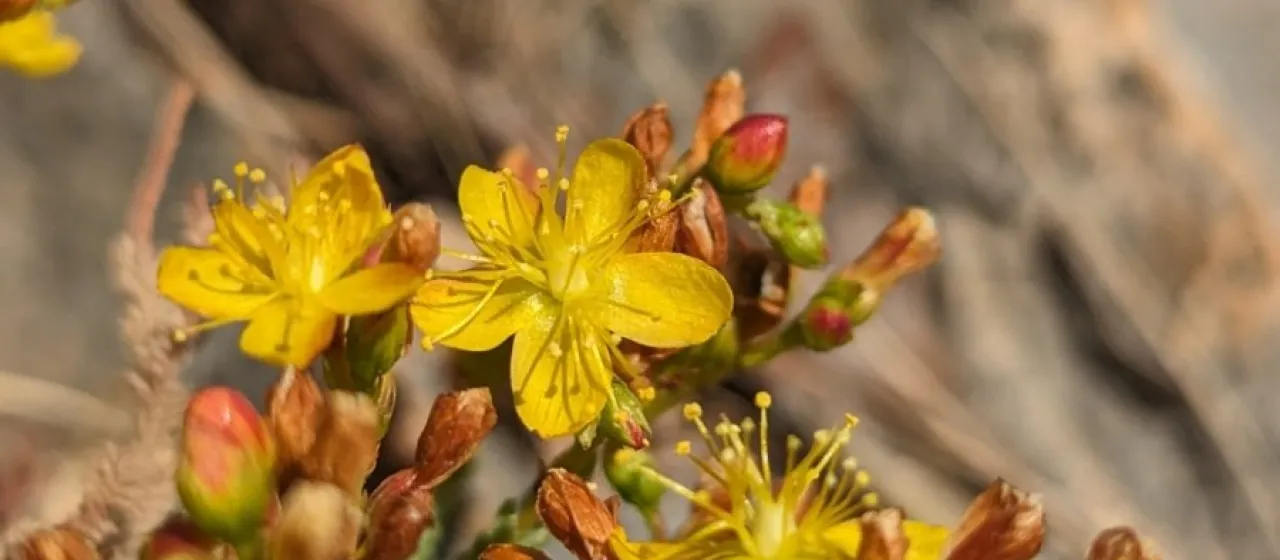
Morphologically, Hypericum ericoides features dense, scale-like leaves that reduce transpirational water loss. The bright yellow flowers are typically displayed during the late spring and summer months. Its compact growth habit makes it resilient against harsh winds and minimizes the need for mechanical support in commercial fields.
Agricultural success depends on providing a growing environment that mimics its natural habitat. Key requirements include highly permeable, stony, or calcareous soils with a pH ranging from neutral to alkaline. Adequate sunlight is crucial, as even partial shade can lead to stunted growth and reduced concentrations of bioactive compounds within the plant tissues.
In terms of management, the main risks include fungal infections, such as root rot, which are triggered by over-irrigation or poor soil drainage. Pest management focuses on early detection of aphids and spider mites, which can damage the delicate floral structures. Overall, the cultivation of this species is a niche but rewarding endeavor for farms specialized in high-value medicinal botanicals.