
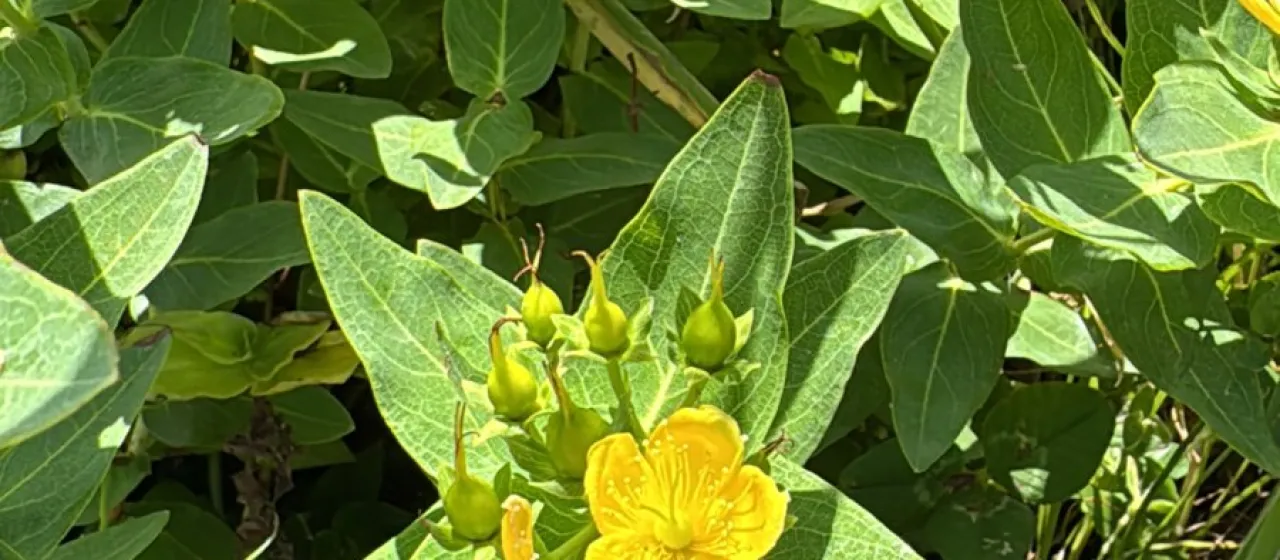
Description
Hypericum foliosum is a perennial evergreen shrub belonging to the Hypericaceae family. Unlike many other members of its genus which are primarily herbaceous, this species features sturdy, woody stems and dense foliage, making it a distinct subject for both agricultural study and ornamental garden usage.
The plant is native to the Azores archipelago. It has evolved to thrive in a mild, maritime climate, characterized by moderate temperatures and consistent moisture. Its natural habitat includes mountainous regions and coastal forest slopes, where it has developed significant resilience to strong oceanic winds.
Botanically, the plant is identified by its opposite, closely set oval leaves and vibrant yellow flowers characterized by numerous prominent stamens. The shrub can grow up to 1.5 meters in height, creating a compact and dense structure. Flowering usually occurs during the summer months, providing a dense canopy of color that is highly valued in garden architecture.
Successful cultivation of Hypericum foliosum requires well-drained, slightly acidic to neutral soil. The crop performs best in sunny to partially shaded locations protected from severe frosts. Standard agricultural practices include regular pruning to maintain plant shape and structure, along with the application of balanced organic fertilizers during the spring growth phase.
The primary agricultural and economic use of this plant revolves around its ornamental potential and its secondary metabolite profile, which is of interest to the pharmaceutical sector. Common challenges include fungal root diseases often caused by waterlogging in heavy soils, as well as occasional infestations by leaf-eating pests. Effective management relies on proper drainage systems and preventative monitoring of foliage health.