
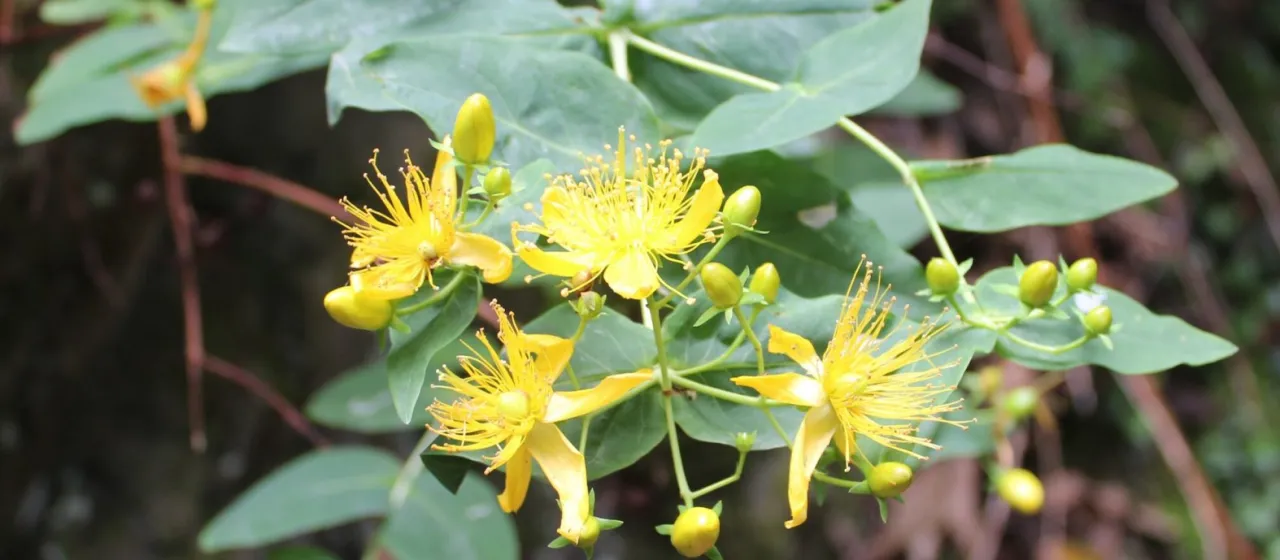
Description
Large-leaved St. John's wort (Hypericum grandifolium) is a perennial shrub belonging to the Hypericaceae family. It is a robust botanical species distinct for its broad foliage and significant content of secondary metabolites. In modern agriculture, it is recognized as a high-potential crop for the production of specialized phytopharmaceutical products and high-quality essential oils.
The plant originates from the Macaronesian region, specifically the Canary Islands and Madeira. This native habitat dictates its preference for temperate, frost-free, and well-ventilated growing environments. When introduced to agricultural fields, the plant requires sites with excellent drainage and exposure to sunlight, as it does not tolerate heavy, waterlogged clay soils.
From a botanical standpoint, Hypericum grandifolium develops as an evergreen shrub with opposite, leathery leaves and prominent golden-yellow flowers. The root system is deep and expansive, providing stability and resilience during periods of low rainfall. Its lifecycle is characterized by steady vegetative growth followed by a profuse flowering period that serves as the primary time for raw material harvesting.
Successful cultivation relies on maintaining a soil pH between 6.0 and 7.0 with adequate organic matter content. Agronomic practices emphasize the importance of spacing to ensure air circulation, which prevents fungal pathogen accumulation. Irrigation should be managed carefully to replicate natural rainfall patterns without causing root saturation, which remains the most significant risk to crop longevity.
Economically, the crop is valued for its secondary compounds, including hypericin and hyperforin, which are sought after by the global medical industry. Besides its medicinal utility, it is increasingly used in sustainable landscaping and as a nectar source for pollinators. The combination of its hardy nature and valuable chemical profile makes it a viable crop for controlled agricultural systems.
Typical agronomic challenges for this species include:
- Susceptibility to soil-borne fungi like Fusarium if drainage is insufficient.
- Infestations by aphids or leaf-miners during the peak growth months.
- Winter die-back if exposed to temperatures below its cold-tolerance threshold.