
Description
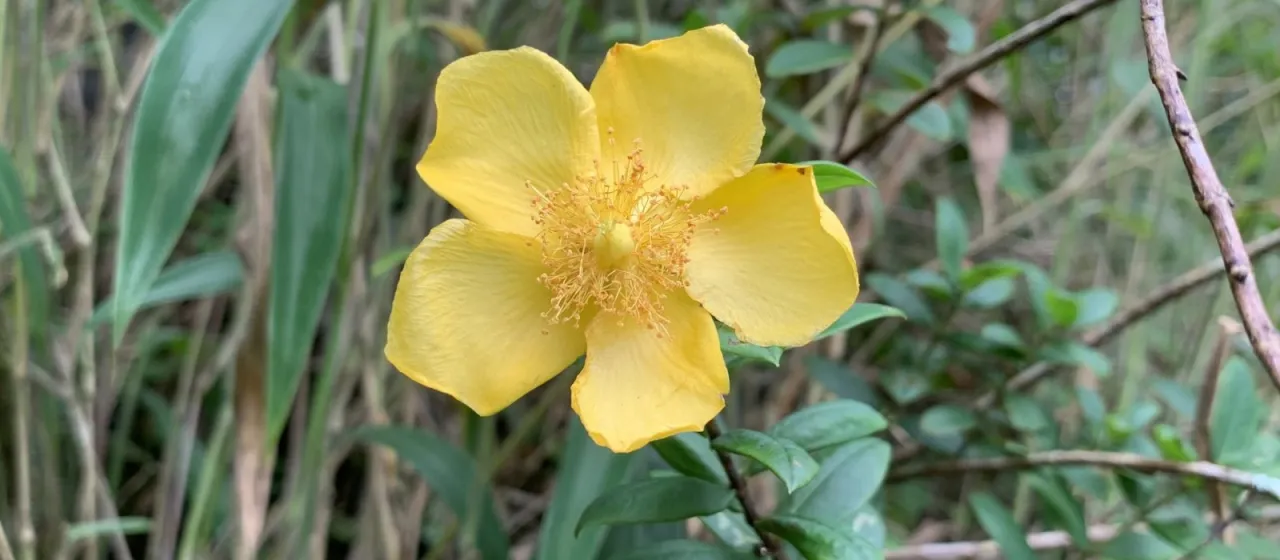
Hooker's St. John's wort (Hypericum hookerianum) is a distinguished evergreen or semi-evergreen perennial shrub belonging to the Hypericaceae family. Unlike common herbaceous relatives, this species is cultivated primarily for its high ornamental value, featuring striking golden-yellow flowers and glossy, dark green foliage that adds significant aesthetic appeal to garden settings.
The plant originates from the Himalayan mountain regions, spanning parts of India, Nepal, and China. Within its natural range, it typically thrives in forest understories or moist mountain slopes. This provenance dictates its preference for sheltered locations that provide consistent humidity and protection from harsh environmental extremes when cultivated in new territories.
Botanically, the plant grows as an upright shrub typically reaching 1 to 1.5 meters in height. Its most notable features include opposite, lanceolate leaves and large, saucer-shaped flowers, often measuring up to 5 cm across. The blooms are characterized by a prominent central cluster of stamens, which remain visually appealing from mid-summer until late autumn.
To ensure optimal growth, Hooker's St. John's wort requires a site with well-drained, fertile soil and protection from cold, drying winds. It performs well in full sun or light shade, provided the moisture levels remain steady. In colder regions, applying a thick layer of organic mulch around the base is essential to protect the root system from freezing temperatures during the dormant season.
- Requires well-drained, slightly acidic to neutral soil.
- Thrives in locations with moderate humidity.
- Benefits from occasional pruning to maintain a bushy habit.
- Generally resistant to major garden pests.
The primary economic use of this plant is within the horticulture and landscape architecture industries. It is frequently employed in borders, mixed shrubberies, and as an architectural specimen. While generally robust, growers should monitor for potential issues like leaf rust or fungal spots during particularly wet seasons, which can be mitigated through proper spacing and regular sanitation practices.