
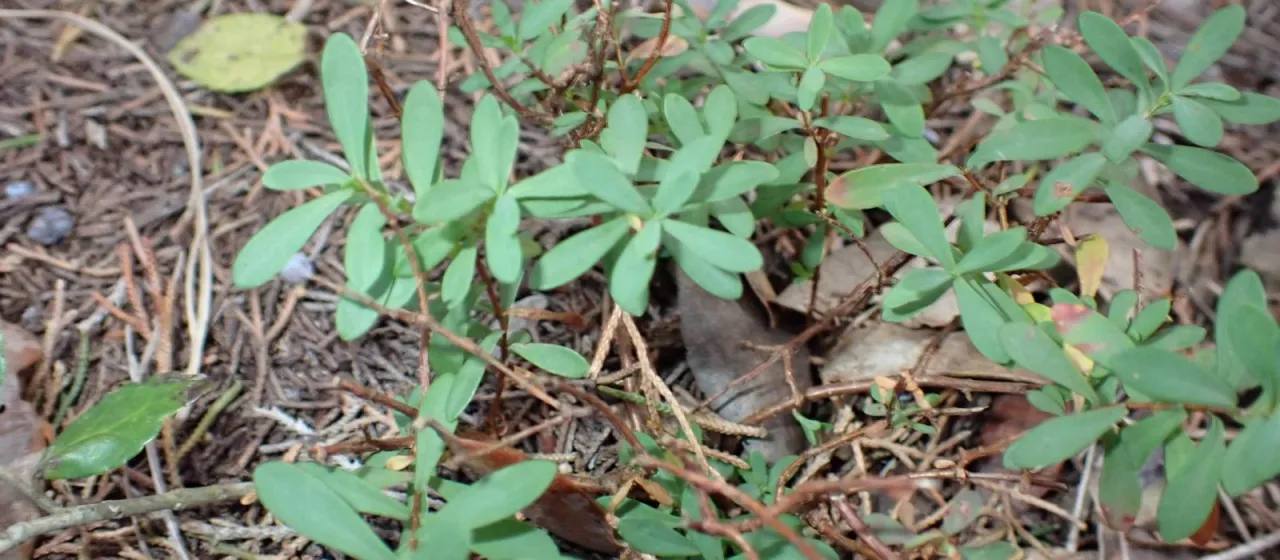
Description
St. Andrew's Cross (Hypericum hypericoides) is a perennial subshrub belonging to the Hypericaceae family. It is recognized for its unique floral morphology, featuring four petals arranged in the form of a cross, which distinguishes it from most other species within the genus Hypericum.
The native range of this species covers vast areas of North and South America. It has successfully adapted to diverse environments, including open woodlands, rocky outcrops, and disturbed habitats, demonstrating a high degree of ecological versatility in its distribution.
Botanically, the plant develops thin, woody stems that reach heights of 30–60 centimeters. Its foliage is lanceolate and often displays a deep green color, while the root system is fibrous and deep, allowing the shrub to tolerate periods of limited water availability and nutrient-poor soil conditions.
Cultivation requires exposure to full or partial sun and well-draining, slightly acidic soil. Agricultural management practices should focus on maintaining moderate soil moisture, as waterlogged conditions often lead to root rot. Regular pruning after the blooming period is recommended to encourage bushiness and prolific flowering in subsequent seasons.
- Requires well-drained, acidic soil.
- Thrives in full sun to partial shade.
- Resistant to most pests if properly spaced.
- Pruning promotes stronger secondary growth.
The primary economic uses of Hypericum hypericoides involve the pharmaceutical industry, where its extracts are studied for potential therapeutic benefits, and the ornamental plant market, where it is utilized for rock gardens and landscape restoration. Potential threats include aphids and leaf spot diseases, which are managed through integrated pest control.