
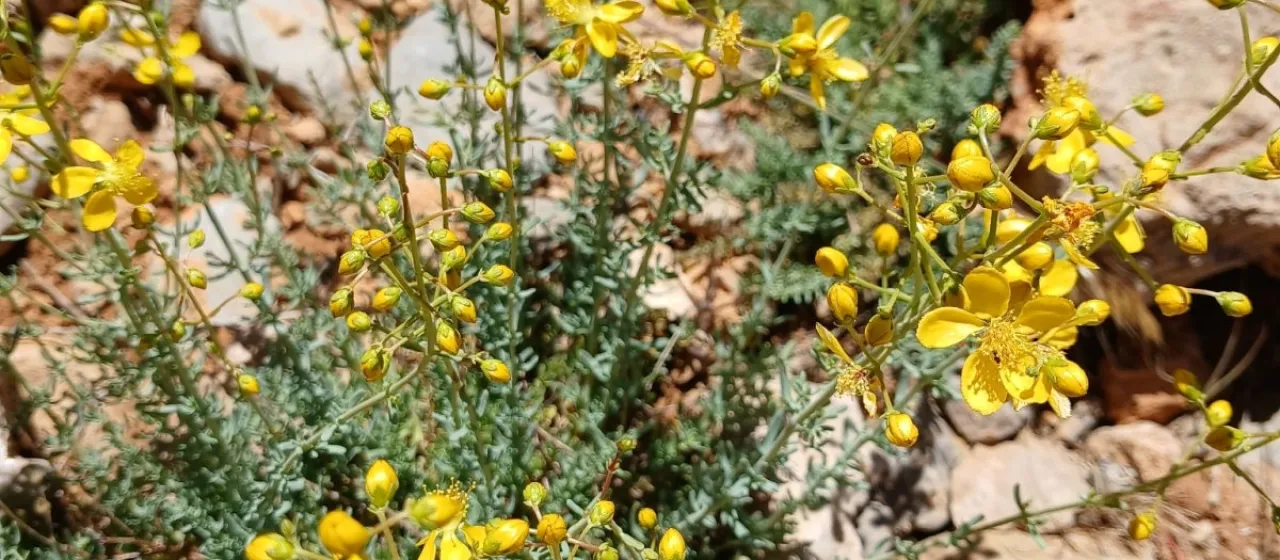
Description
Lebanese St. John's Wort (Hypericum libanoticum) is a perennial shrub-like herbaceous plant belonging to the Hypericaceae family. Known for its resilience, this species represents a unique botanical lineage that has been traditionally valued for its chemical properties and adaptive growth habits in challenging environments.
The plant originates from the Eastern Mediterranean, with a primary distribution range across Lebanon and its surrounding mountainous zones. It is highly adapted to calcareous, stony substrates and climates characterized by hot, dry summers and cool, wet winters. This geographic history gives the species a significant advantage when cultivating in arid regions.
Botanically, it is defined by its erect stems and elliptic, glandular-dotted leaves. Its distinct yellow flowers, which often possess characteristic dark spots on the petals, bloom in clusters. The root system is robust and fibrous, optimized for stabilizing the plant on rocky terrain and extracting nutrients from low-fertility soils.
Cultivation practices require full sun exposure and excellent soil drainage to prevent root rot. While the plant is drought-tolerant once established, supplemental irrigation during the seedling stage is essential. Soil pH should ideally be neutral to slightly alkaline. Pruning after the blooming cycle helps maintain plant vigor and increases the yield of vegetative material for the next season.
Industrial applications and uses include:
- Extraction of bioactive compounds for pharmaceutical and herbal medicine.
- Landscaping in xeriscape and rock garden designs.
- Use in soil erosion control on steep, dry slopes.
- Production of botanical extracts for cosmetic purposes.
Common pests include aphids and mites, particularly when plants are grown in confined or less-ventilated conditions. Diseases are primarily related to waterlogged soils, which lead to fungal pathogens. Adopting strict irrigation schedules and utilizing well-draining substrate media is the most effective way to manage these risks in a commercial production setting.