
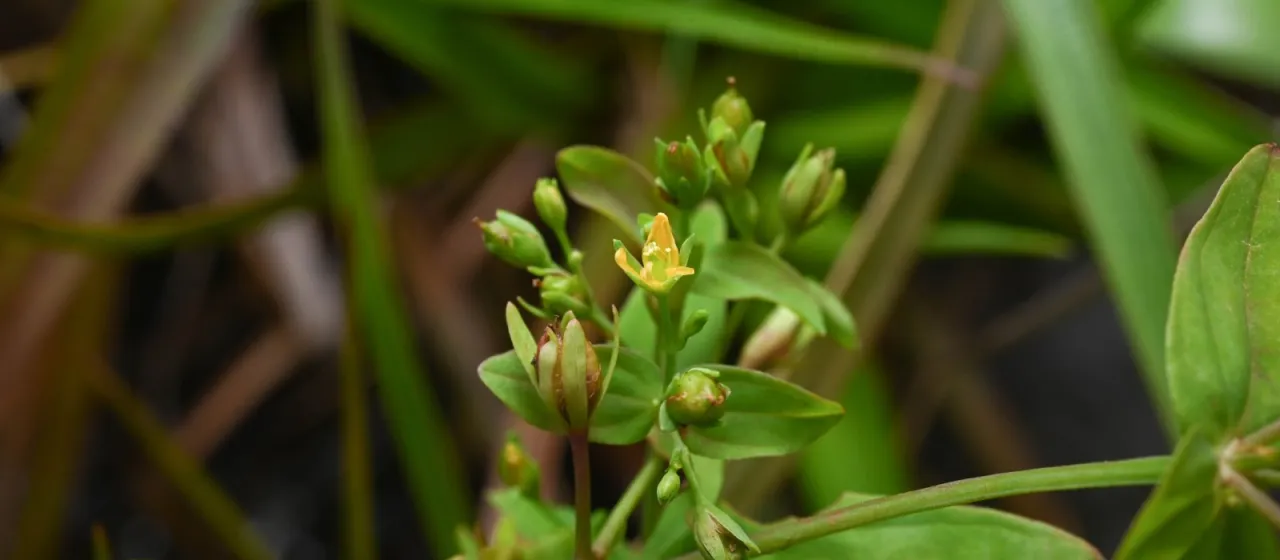
Description
Dwarf St. John's wort (Hypericum mutilum) is a herbaceous perennial plant belonging to the Hypericaceae family. Despite its common name, it is a distinct botanical entity characterized by its preference for moist environments, differing significantly in its ecological requirements from the more common medicinal Hypericum species.
The native range of this plant is North America, where it typically inhabits wetlands, stream banks, and damp meadows. Over time, it has spread to various other regions, adapting to similar environments. Understanding its natural habitat is crucial for successful cultivation, as the plant serves as an indicator of high soil moisture levels.
Botanically, Hypericum mutilum is recognized by its small, opposite leaves and sparse yellow flowers that appear in loose cymes. The stems are often multi-branched and can reach a modest height. The root system is relatively shallow, designed to thrive in substrates that are consistently saturated, making it a unique species for specialized agricultural sites.
Agricultural practices for this species require careful soil management to maintain moisture without causing stagnation. The plant prefers organic-rich, damp soils and generally does not tolerate prolonged drought. Planting should be done in areas that mimic its natural wetland tendencies, ensuring that competition from faster-growing weeds is controlled during the establishment phase.
In terms of agricultural use, this species is mainly studied for its phytochemical profile and its utility in restoration ecology for wetland areas. It is susceptible to standard pests such as aphids and various leaf-feeding beetles. Fungal infections, particularly root rot, represent the most significant risk to the health of the crop, necessitating good drainage management even in damp conditions.