
Description
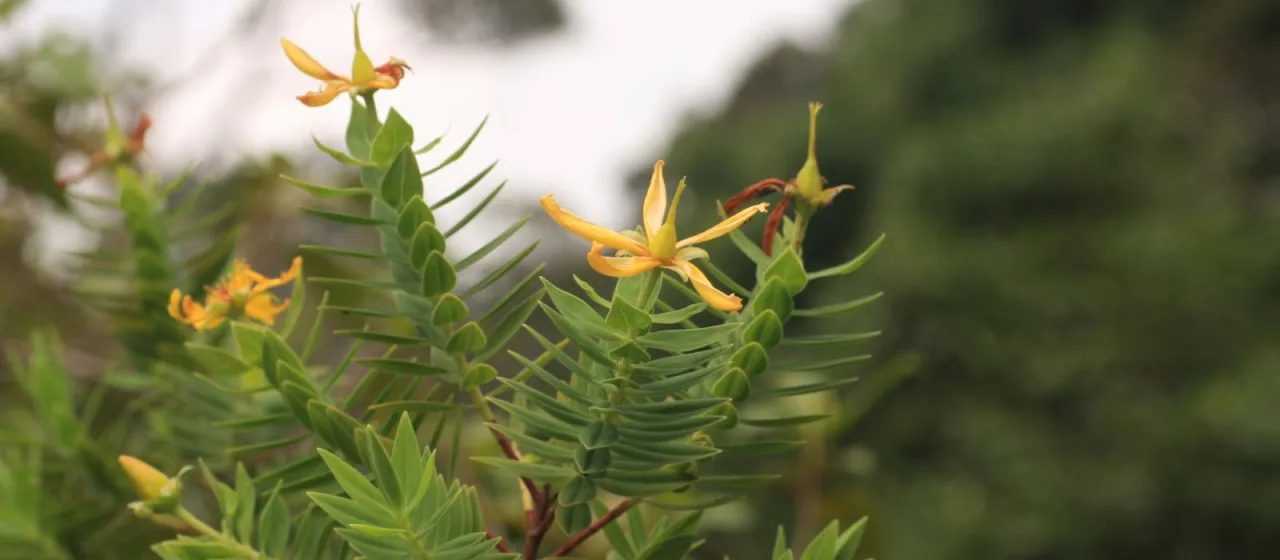
Mysore St. John's wort (Hypericum mysurense) is an ornamental, evergreen shrub belonging to the family Hypericaceae. This species is recognized for its compact growth habit and vibrant yellow blooms, making it a popular choice for structured gardening and botanical interest.
Native to the mountain regions of Southern India, particularly the Mysore Plateau, the plant is well-adapted to high-altitude environments. This origin contributes to its resilience and ability to thrive in various climates, provided that the soil conditions mimic its natural mountainous habitat.
The botanical structure of Hypericum mysurense is characterized by narrow, leathery leaves and distinctive flowers featuring clusters of prominent stamens. The shrub reaches a moderate height, typically maintaining a dense and branched structure that requires minimal pruning to keep its form.
Cultivation requirements focus primarily on soil drainage and exposure. It thrives in well-drained, slightly acidic soil and prefers positions with full to partial sun exposure. During the initial planting stages, it is vital to provide adequate irrigation until the root system is established, after which it becomes relatively hardy.
Its primary economic and agricultural use is ornamental landscaping, where it is valued for its evergreen nature and long flowering period. Research into its chemical composition continues, as many Hypericum species contain compounds that are biologically significant for modern pharmaceutical developments.
Management of the crop requires monitoring for standard pests such as aphids and spider mites, which can proliferate in dry conditions. Implementing integrated pest management strategies, such as biological control or targeted horticultural oils, is usually sufficient to maintain the plant's health and aesthetic appeal.