
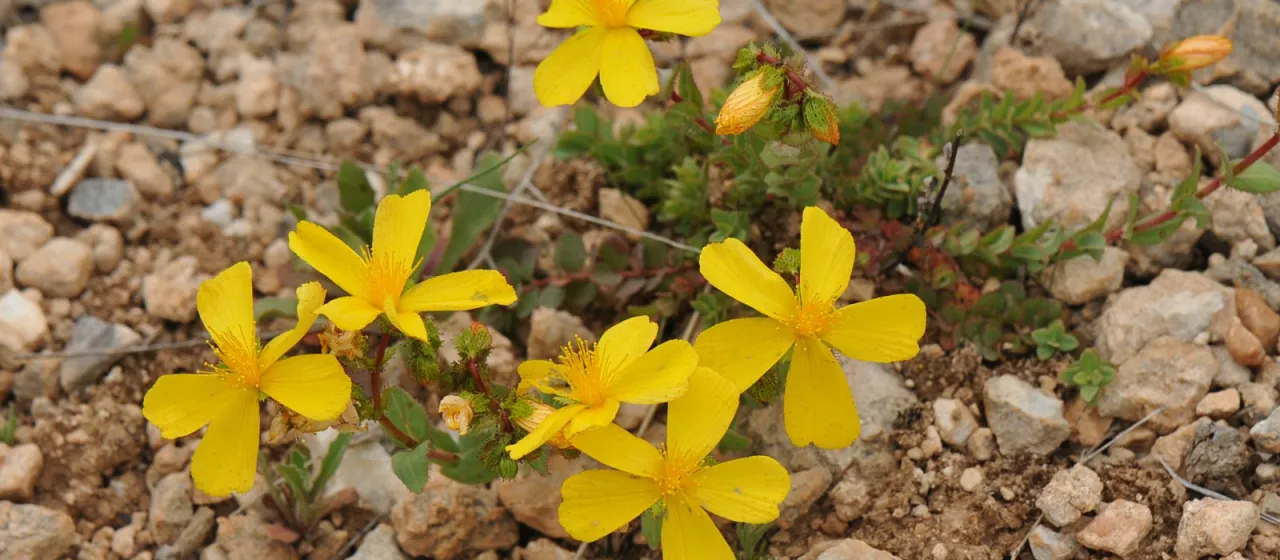
Description
Rumelian St. John's wort (Hypericum rumeliacum) is a perennial herbaceous plant belonging to the Hypericaceae family. As an agricultural crop, it is cultivated primarily for its medicinal properties, containing bioactive compounds that are highly valued in the pharmaceutical and herbal medicine sectors.
The natural habitat of this species is centered in the Balkan Peninsula and surrounding southeastern European regions. It thrives in temperate environments, typically occupying open grasslands and rocky slopes, which signifies its high adaptability to well-drained soils and direct solar exposure.
Botanically, the plant is characterized by its erect stems and opposite, glandular-dotted leaves. During the flowering stage, it produces clusters of vibrant yellow flowers, which are the primary parts harvested for commercial use. The root system is robust, allowing the plant to persist through varying seasonal weather conditions.
Regarding cultivation requirements, the crop demands sunny locations and fertile, porous soil structures to prevent root rot. Proper field management includes regular weeding during the early stages of growth and ensuring adequate spacing between rows to facilitate airflow and simplify mechanized harvesting procedures.
Economic importance lies in the extraction of essential oils and active metabolites such as hypericin. Farmers must remain vigilant against common pests such as aphids and fungal pathogens like rust, which can compromise the quality of the harvested biomass if not addressed with appropriate integrated pest management strategies.