
Description
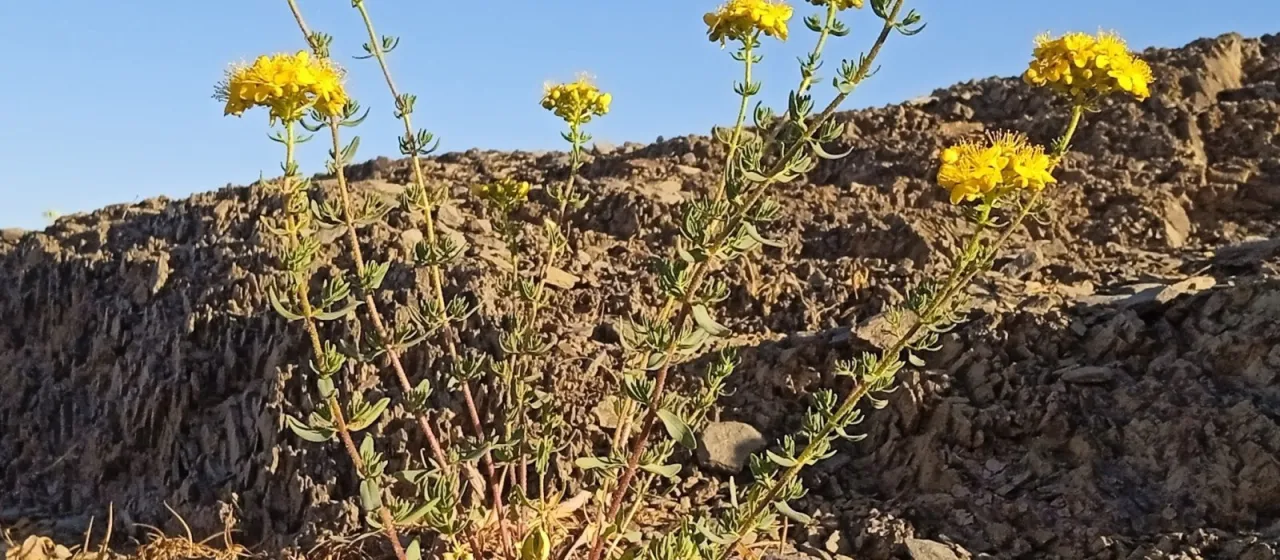
Rough St. John's wort (Hypericum scabrum) is a perennial herbaceous plant belonging to the Hypericaceae family. Recognized for its woody base and rugged, stiff foliage, this species is a significant medicinal crop. It contains a diverse range of bioactive compounds, primarily hypericin and essential oils, which have established it as a priority species for the pharmaceutical industry.
The plant originates from arid and semi-arid regions of Central Asia, the Caucasus, and the Middle East. It is naturally adapted to rocky slopes and high-altitude steppes where climatic conditions are harsh. Due to these evolutionary traits, the species is cultivated primarily in regions characterized by low precipitation and high solar radiation, where it thrives in conditions that would be unsuitable for most other crops.
Botanically, Hypericum scabrum features highly branched stems, typically reaching 20–50 cm in height, covered with glandular dots. Its leaves are small, stiff, and opposite, often exhibiting a coarse texture. The yellow flowers bloom in late spring and early summer, arranged in terminal corymbs. The root system is deep and woody, allowing the plant to tap into deep soil moisture reserves in otherwise dry habitats.
Agronomic success with this crop requires well-drained, sandy, or rocky soils. It is intolerant of waterlogging, which often leads to root rot, the most common disease for this species. Cultivation practices include row spacing to allow for adequate airflow and weed control during the seedling phase. Due to its slow initial growth rate, mechanical or manual weeding is essential until the crop establishes a strong, deep root system.
The main commercial utilization of the plant is in the extraction of active pharmaceutical ingredients used for their antiseptic, anti-inflammatory, and healing properties. In agricultural settings, producers must monitor for typical pests such as leaf beetles or aphids during the active growth period. Proper harvesting techniques, often involving the clipping of flowering tops during peak anthesis, are crucial to maintaining the quality and concentration of medicinal substances.
- Exceptional tolerance to drought conditions.
- Prefers nutrient-poor, well-aerated rocky soils.
- Requires high levels of sunlight for optimal growth.
- Susceptible to root rot under high moisture conditions.