
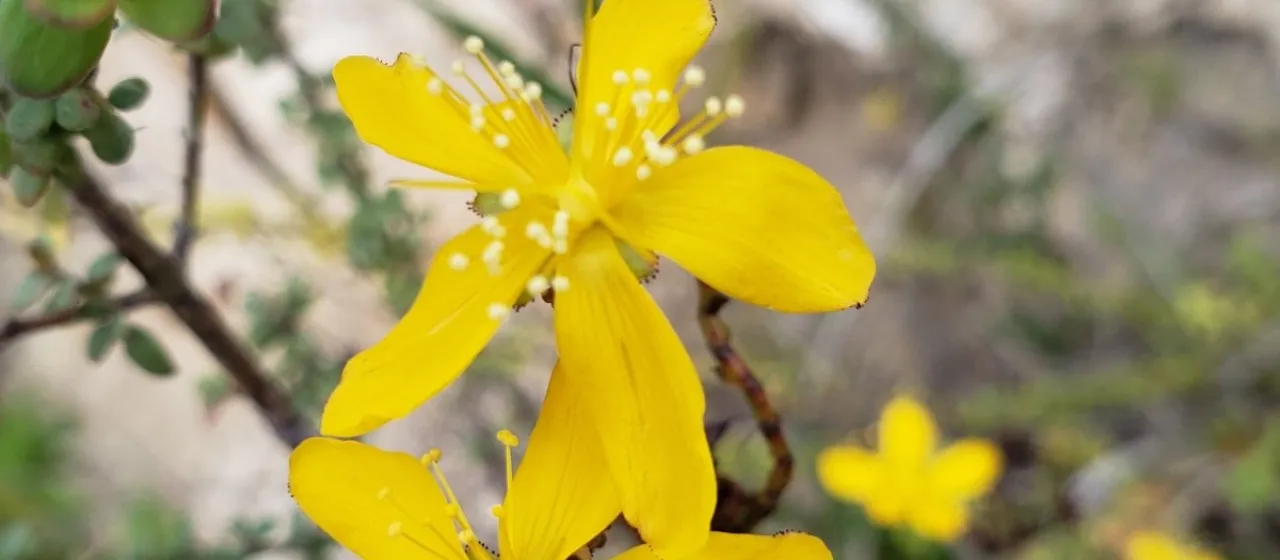
Description
Thyme-leaved St. John's wort (Hypericum thymifolium) is a perennial shrub species belonging to the family Hypericaceae. It is a distinct plant known for its compact growth habit and foliage that closely resembles wild thyme, which distinguishes it from larger, more common varieties of the genus.
The plant originates from the Eastern Mediterranean, primarily found in Greece and the Aegean islands. It is well-adapted to Mediterranean climates, thriving in rocky environments and calcareous soils where water availability is often limited for longer periods during the year.
Botanically, it features small, opposite, narrow leaves on woody stems. The flowers are typically bright yellow, which is a hallmark of the Hypericum genus. The plant stays low to the ground, forming dense mats, which is an evolutionary adaptation to survive strong winds and intense sun exposure in its natural cliff habitats.
Agricultural success depends on mimicking these natural conditions. The crop requires a well-drained, porous soil structure and full solar exposure. It is highly intolerant of waterlogging, which often leads to root fungal issues. Planting in raised beds or rocky soil mixes is recommended to ensure the roots remain healthy and aerated.
Economic and household usage involves both its ornamental value and potential medicinal applications. It is frequently utilized in xeriscaping due to its drought tolerance. Medicinally, species within the genus are researched for their secondary metabolites, which provide anti-inflammatory and antiseptic properties when harvested and processed properly.
- Requires full sun for optimal flowering.
- Excellent drought resistance.
- Thrives in poor, rocky soil.
- Moderate pruning supports better density.
Regarding health, the plant is relatively resilient but can suffer from root rot if drainage is insufficient. Common pests include mites that feed on foliage during hot, dry spells. Careful monitoring of humidity levels is essential to prevent mildew or fungal pathogens from attacking the base of the plant in cooler, damp seasons.