
Description
Honeysuckle-leaved St. John's wort (Latin: Hypericum xylosteifolium) is a perennial ornamental shrub belonging to the Hypericaceae family. Unlike many other members of the genus that grow as herbaceous plants, this specific species is recognized for its woody, bushy structure. Its common name refers to the distinctive shape of its leaves, which bear a resemblance to the foliage of the honeysuckle plant.
Originating from the Caucasus region, this species is well-adapted to mountain and temperate environments. In cultivation, it thrives in regions with moderate climates, preferring locations that receive ample sunlight throughout the day. While it is quite hardy, providing shelter from harsh winter winds can significantly improve the overall vitality and structural integrity of the shrub.
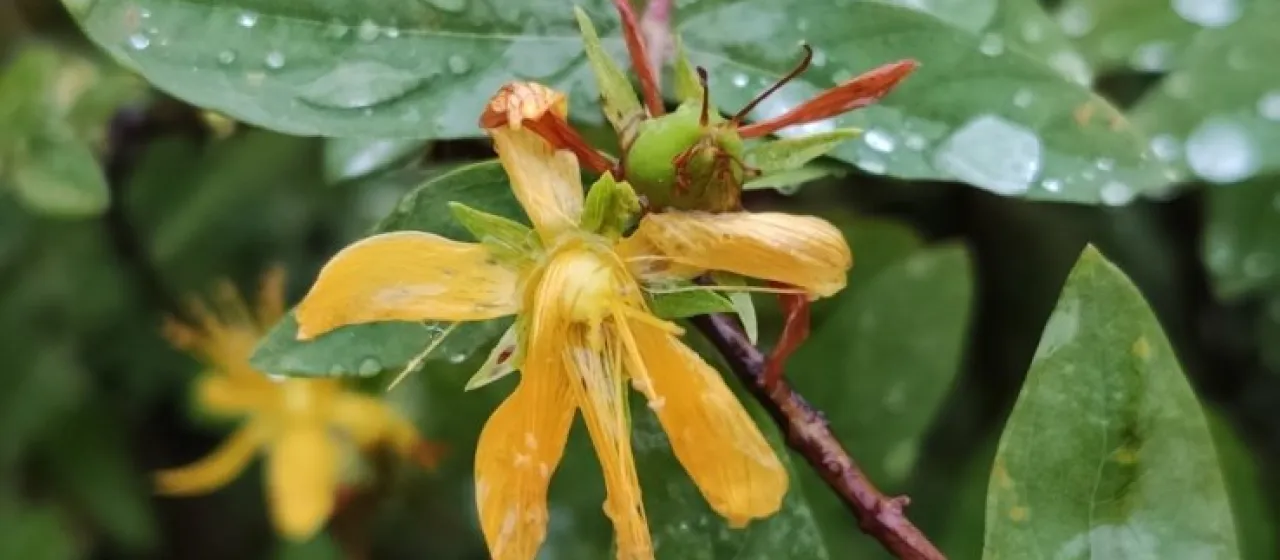
Botanically, Hypericum xylosteifolium is characterized by its woody branches and vivid yellow flowers that bloom in clusters. The plant typically reaches a moderate height, making it an ideal choice for mid-layer garden plantings. Its root system is deep and robust, which grants the plant a degree of drought tolerance once it has become established in the soil.
Successful cultivation requires soil with excellent drainage. The species is not particularly demanding regarding nutrient richness but performs best in slightly acidic to neutral loams. Routine agrotechnical practices include annual pruning, which is essential for maintaining a compact shape and encouraging the growth of new, flower-bearing shoots each season.
The primary use for this species is in decorative landscaping, where it is valued for its hardiness and low maintenance requirements. While generally resistant to major pests, the plant should be monitored for issues associated with excessive moisture, such as root rot. Proper spacing and airflow are the best preventative measures against common fungal pathogens.