
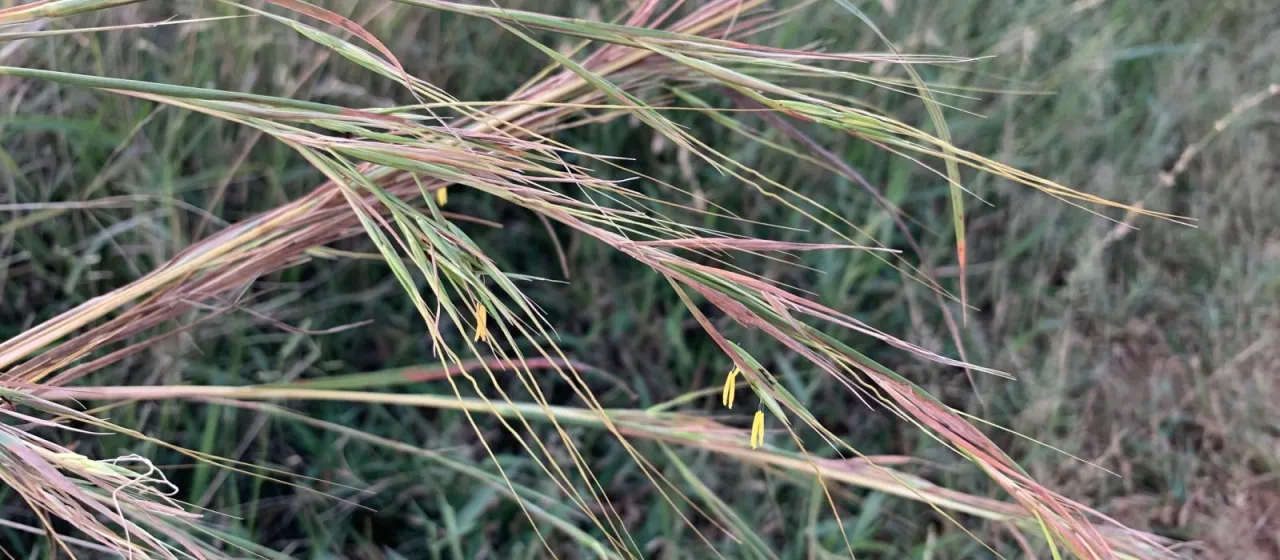
Description
Hyperthelia dissoluta is a perennial grass species belonging to the Poaceae family. Commonly known in its native regions, this grass is a robust, bunch-forming plant that plays a significant role as a forage source in tropical and subtropical agro-ecosystems.
The species is indigenous to the African continent, widely distributed across savanna biomes and secondary grasslands. It has evolved to thrive in environments characterized by distinct wet and dry seasons, exhibiting high resilience to periodic burning, which is a common feature of its natural habitat. Its distribution spans from savanna regions to woodland margins.
Botanically, Hyperthelia dissoluta is characterized by its tall, erect stems that can reach up to 2.5 meters. The leaves are narrow and often rigid, containing silica which contributes to its durability. The inflorescence is a specialized panicle with distinct, loose spikelets, which gives the plant its scientific name and distinct appearance during the reproductive phase.
In terms of agronomy, the plant is well-adapted to a variety of soil types, preferring well-drained loamy or sandy soils. It demonstrates exceptional drought tolerance, making it a valuable resource in regions where water availability is inconsistent. Cultivation requires careful grazing management; if not grazed at the appropriate developmental stage, the forage quality significantly decreases due to lignification of the stems.
The primary agricultural use is for livestock grazing and hay production. While it provides excellent biomass in its juvenile stage, producers must manage potential issues effectively:
- Leaf spot diseases during prolonged humid periods.
- Pest pressure from stem-boring insects.
- The need for rotational grazing to maximize nutritional uptake by cattle.