
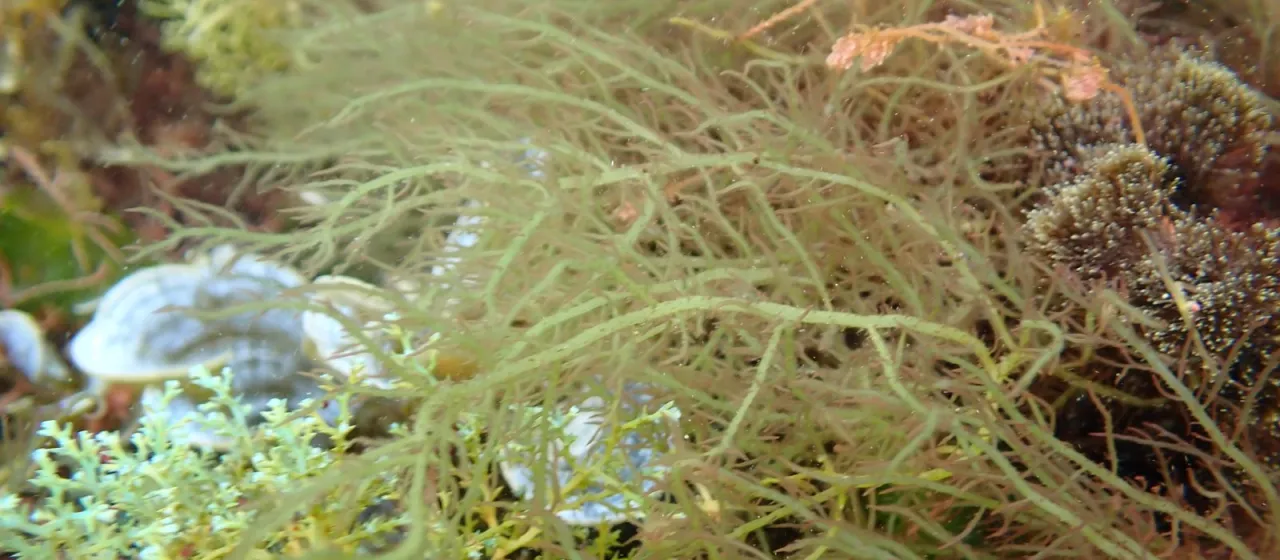
Description
Hypnea musciformis is a prominent species of red seaweed (Rhodophyta) within the Cystocloniaceae family. It is widely recognized in global mariculture for its ability to produce significant biomass and its high content of sulfated polysaccharides, particularly kappa-carrageenan, which makes it an economically viable crop.
The morphology of this alga consists of highly branched thalli, which often feature hooked, tendril-like structures used for attachment to substrates or other marine organisms. Its appearance and pigmentation vary significantly based on environmental conditions, typically ranging from brownish-red to yellow-green depending on depth and nutrient availability.
The native distribution covers warm temperate and tropical coastal waters globally. Successful cultivation requires stable marine environments with moderate water motion, which facilitates nutrient uptake and prevents the accumulation of waste products around the thalli. It is predominantly cultivated in shallow lagoon systems or on off-bottom farming structures.
In terms of agronomy, Hypnea musciformis is propagated through vegetative fragmentation. Small cuttings are attached to ropes or nets, where they regenerate and grow rapidly. Maintaining optimal water chemistry and managing the density of the crop are critical, as overcrowding can lead to physiological stress and increased susceptibility to opportunistic epiphytic species.
The primary commercial application is the extraction of carrageenan, which is widely used in the food industry as a gelling and thickening agent. Beyond food technology, the seaweed is utilized in the cosmetic industry, as a soil conditioner in sustainable agriculture, and increasingly as a source of bioactive compounds in pharmaceutical research.
- High capacity for vegetative biomass expansion.
- Significant economic role in carrageenan production.
- Adaptability to various tropical maritime conditions.
- Essential nutrient requirements (nitrogen and phosphorus).