
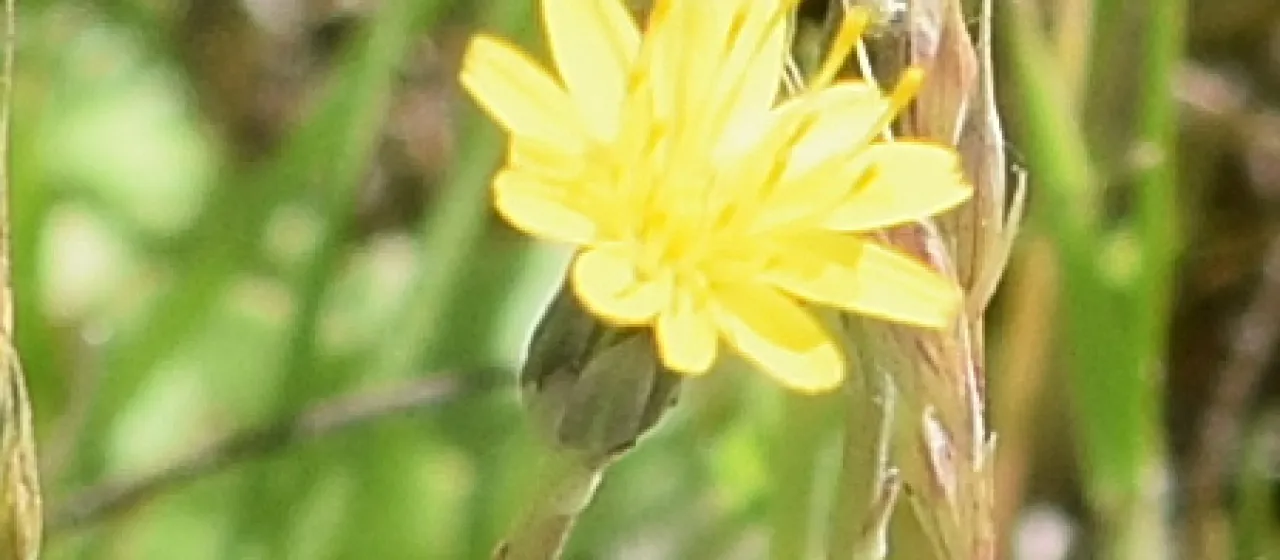
Description
Smooth cat's-ear (Latin Hypochaeris glabra) is an annual herb belonging to the Asteraceae family. While primarily categorized as a weed in agricultural landscapes, it is a significant species in botanical studies and soil management due to its ability to colonize disturbed environments and marginal lands.
Originally native to the Mediterranean region, this species has spread globally, thriving in temperate climates. It is frequently found in arable fields, pastures, and roadsides, showing a clear preference for light, sandy, or well-drained soils where competition for moisture is the limiting factor for other plants.
Botanically, it is identified by its basal rosette of glabrous leaves and thin, branched stems carrying small, yellow flower heads. It is a prolific seeder, with each plant capable of producing a large number of seeds equipped with feathery pappi, allowing them to disperse over significant distances via wind, which facilitates its rapid invasion of new fields.
Successful management of this plant requires a comprehensive approach. Because it prefers low-fertility soils, improving soil structure and increasing crop competition through proper fertilization and seeding density are effective preventive strategies. Mechanical weeding, specifically shallow tillage, is highly efficient at the seedling stage before the plant establishes its deep taproot.
In terms of agricultural impact, the plant acts as a primary competitor for water and nutrients in early spring crops. Typical diseases include fungal rusts and powdery mildew, which can affect its vitality, but agriculturalists focus on chemical or mechanical control. Despite its limited utility, it serves as a nectar source for some pollinators in non-crop areas, though it remains a target for eradication in main production fields.