
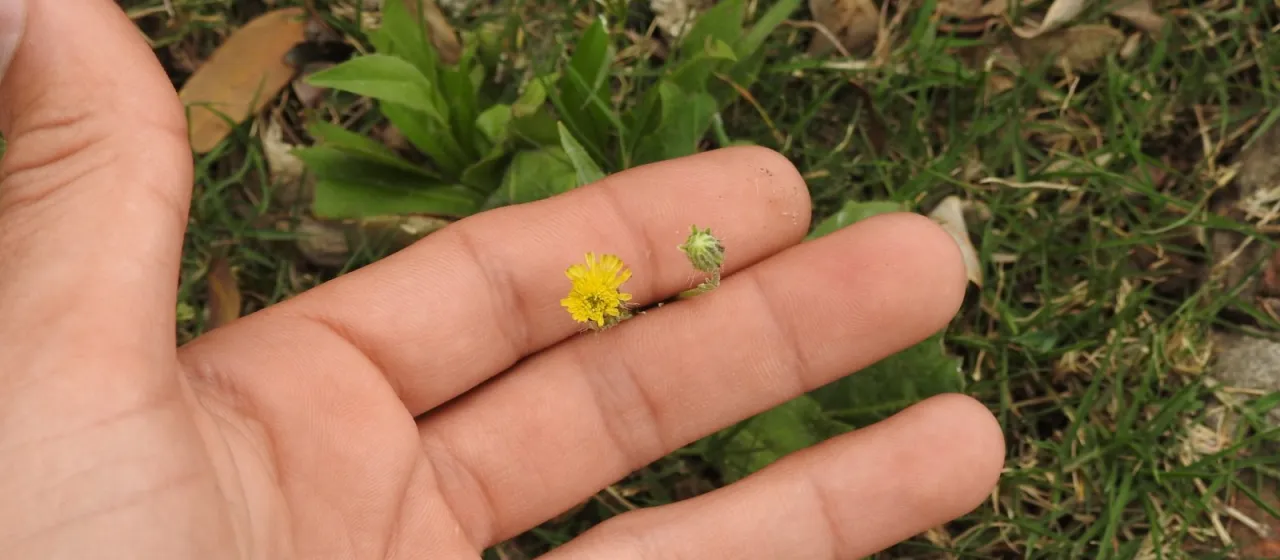
Description
Spotted catsear (Hypochaeris microcephala) is a perennial herbaceous plant belonging to the Asteraceae family. In agricultural practice, it is recognized as a significant component of meadow ecosystems and grazing lands, exhibiting specific adaptive mechanisms to thrive within diverse environmental settings.
The native range of this species is located in South America, primarily within regions of Brazil, Argentina, and Uruguay. It is widely distributed across temperate and subtropical zones in these countries, where it effectively competes within natural grasslands and adapts well to various soil types and climatic fluctuations.
Botanically, the plant is characterized by a basal rosette of leaves and upright floral stems bearing typical asteraceous flower heads. Its taproot system allows for efficient moisture uptake from deeper soil layers, which significantly enhances its resilience during periods of limited precipitation.
In terms of cultivation requirements, spotted catsear prefers well-drained soils with a moderate nutrient profile. While it is not typically grown as a monoculture, it is highly valued in pastoral agronomy for its contribution to total biomass in grazing systems, displaying substantial plasticity in response to various management practices.
The primary economic use of this plant is as forage for livestock. Agricultural challenges include susceptibility to certain foliar fungal pathogens and insect pests that may impact vegetative growth phases. Effective management strategies involve monitoring plant health and ensuring appropriate grazing intensity to maintain the vitality of the pasture.