
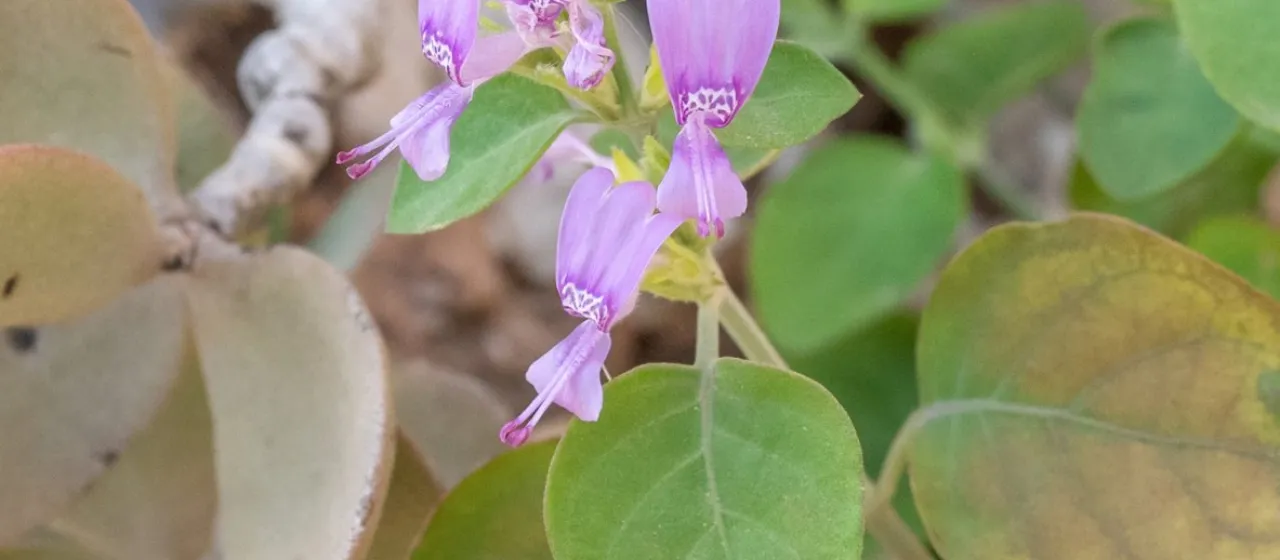
Description
Hypoestes forskalei is a herbaceous perennial plant belonging to the Acanthaceae family. Unlike its more popular ornamental relatives, this species is recognized for its ecological resilience and its specific role within the native ecosystems of its origin, providing essential ground cover in harsh environments.
The native range of this species extends across the Arabian Peninsula and parts of Eastern Africa. It typically thrives in arid and semi-arid mountainous regions, often establishing itself on rocky outcrops and slopes. Its ability to tolerate dry spells is a defining trait of its evolutionary adaptation to the local climate.
Botanically, Hypoestes forskalei is characterized by its branching stems and ovate leaves, often covered in fine pubescence. The flowers are generally small, tubular, and protected by floral bracts, which contribute to its overall structural integrity. The root system is notably efficient at absorbing moisture from deep soil layers.
Regarding agrotechnical requirements, the plant necessitates well-draining soil to prevent root rot, which is its primary vulnerability in non-native climates. Cultivation success depends on providing high light intensity and maintaining a warm environment. It is critical to avoid waterlogging, as the species is adapted to periods of scarcity rather than constant saturation.
In terms of economic and agricultural use, this species is primarily valued for its potential in ethnobotanical applications. Local populations have traditionally utilized the plant for its bioactive compounds, which demonstrate anti-inflammatory properties. Furthermore, it serves as a specialized plant for ecological conservation in mountainous terrains where it helps mitigate soil erosion.
- Common pests: spider mites, mealybugs.
- Primary diseases: root rot due to waterlogging, leaf spot.