
Description
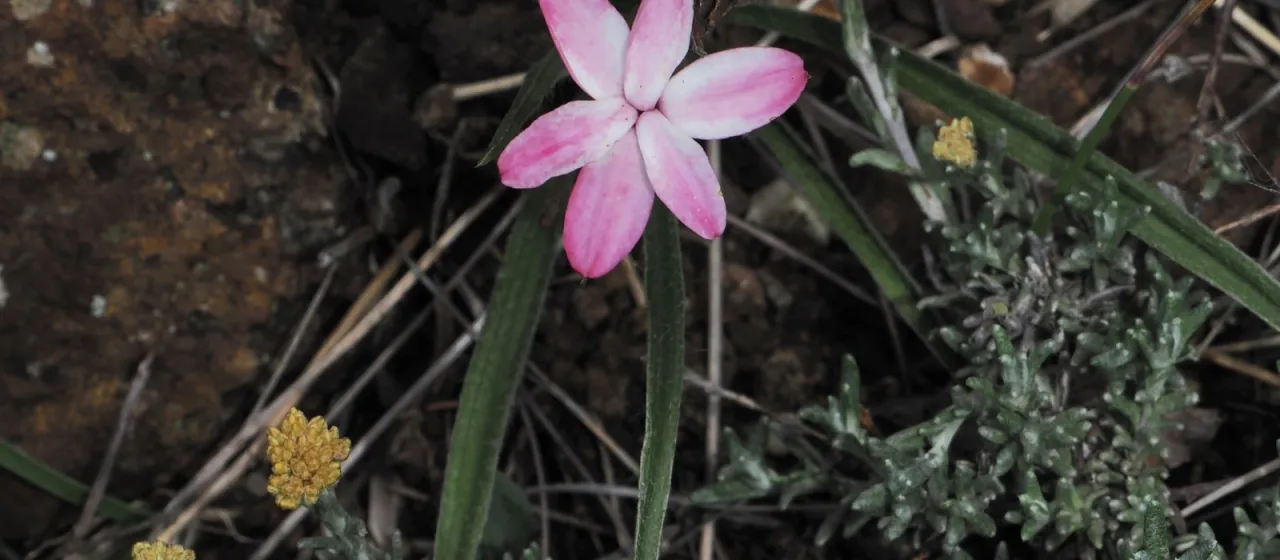
Hypoxis baurii is a perennial herbaceous plant belonging to the Hypoxidaceae family. It is a bulbous geophyte known in horticulture for its vibrant yellow, star-shaped flowers and slender, grass-like leaves. While not a commercial field crop, it is a highly valued ornamental species often found in specialized collections of rare geophytes.
Native to the southern regions of Africa, specifically South Africa, this plant is adapted to alpine grassland environments. In cultivation, its range is limited to temperate regions where it is grown in containers or sheltered garden beds, as it requires specific protection from harsh winter frosts and constant soil moisture during its dormant phase.
The botanical structure of Hypoxis baurii is characterized by a firm, fleshy corm that serves as a reservoir for nutrients. The foliage is typically narrow and covered with fine hairs, an evolutionary adaptation to reduce transpiration. The plant produces short inflorescences that bloom profusely, provided that the plant has received sufficient energy during the growing season.
Agricultural and horticultural requirements focus on soil drainage and climate management. It thrives in gritty, well-draining substrates with a slightly acidic to neutral pH. Proper cultivation necessitates a distinct wet-dry cycle: high moisture during the growing phase and a period of relative dryness during dormancy to prevent corm rot, which is the primary challenge in cultivation.
- Requires full sun to partial shade for optimal flowering.
- Propagation is best achieved through division of offsets or seed sowing.
- Sensitive to waterlogging, necessitating excellent drainage systems.
The primary economic and practical use of Hypoxis baurii is in the ornamental plant industry. Its unique aesthetic makes it a target for boutique nurseries. Typical issues include fungal infections like basal rot caused by poor soil ventilation and pest attacks, such as aphids or spider mites, which can occur if the plant is grown in poorly ventilated greenhouses or indoor conditions.