
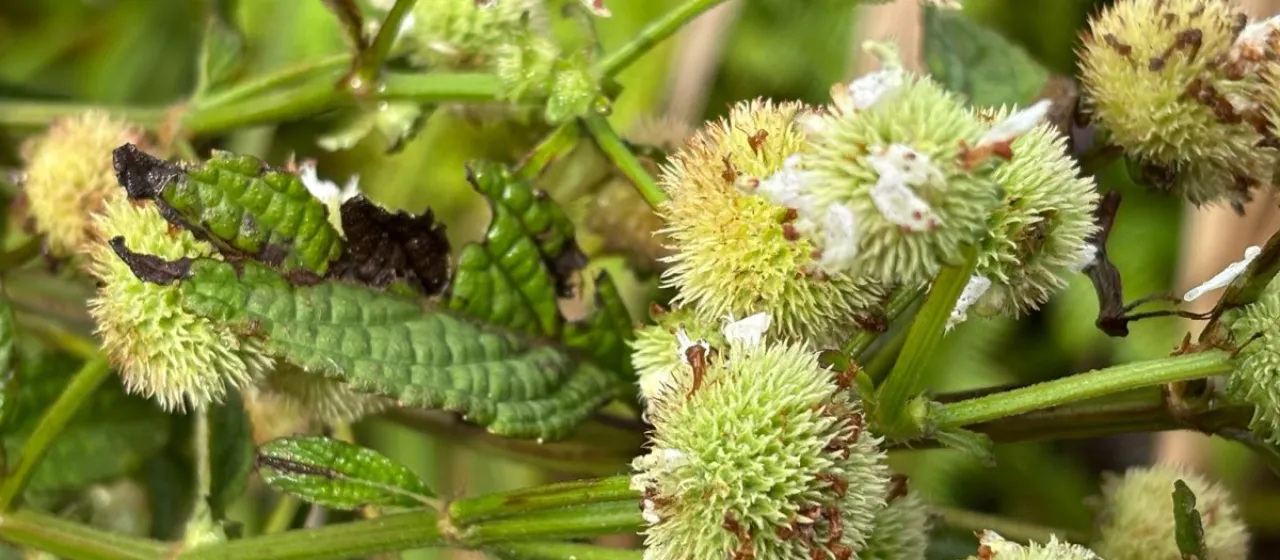
Description
Hyptis rhomboidea is a herbaceous perennial plant belonging to the Lamiaceae (mint) family. This crop is primarily known for its presence in tropical regions, where it has historically been used for its medicinal and ecological properties, serving as an interesting subject for modern agricultural and botanical research.
The plant is native to the tropical regions of the Americas, thriving in environments with consistent warmth and moisture. Its natural habitat includes open grasslands and the margins of tropical forests. As an agricultural prospect, it has been introduced to various regions where the climate mimics its native range, showing a capacity for rapid growth in stable environments.
Botanically, Hyptis rhomboidea is recognized by its sturdy stems and distinctively rhomboid-shaped leaves, which provide its scientific nomenclature. The plant produces dense, head-like inflorescences that attract various pollinators, ensuring healthy seed production. The structure of the root system is fibrous, which assists in moisture retention during short dry spells.
Cultivation requires well-drained, nutrient-rich soil with a slightly acidic to neutral pH level. As a tropical species, it is highly sensitive to frost, requiring year-round warm temperatures, ideally between 22°C and 30°C. Proper irrigation management is essential, as the plant needs sufficient moisture to support its rapid vegetative phase without waterlogging the soil.
Regarding commercial use, the plant is primarily harvested for the extraction of aromatic oils. In agricultural landscapes, it is also valued as a beneficial plant that supports local bee populations. Typical diseases include fungal infections like powdery mildew, which can be managed through proper spacing and ventilation, while pests such as spider mites may require integrated pest management strategies.