
Yacon
Smallanthus sonchifolius (Poepp.) H. Rob.
Description
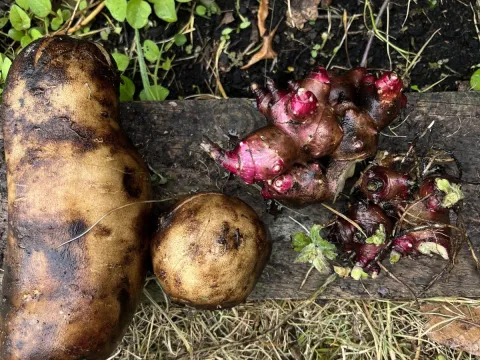
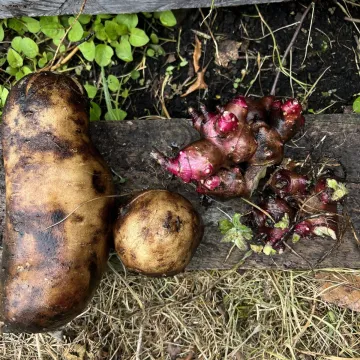
Yacon (Smallanthus sonchifolius) is a perennial plant belonging to the Asteraceae family. It is primarily grown for its large, succulent tuberous roots, which are highly valued for their sweet taste and high concentration of fructooligosaccharides, specifically inulin, providing health benefits as a natural prebiotic.
The plant originates from the Andean region of South America, historically spanning areas from Colombia to Argentina. Due to its adaptability, it has been introduced to many temperate regions globally, where it thrives in long growing seasons with mild temperatures and adequate precipitation throughout the developmental cycle.
Botanically, the yacon plant develops a leafy, herbaceous stem that can grow up to 2 meters tall. Its root system is complex, consisting of fibrous roots for water uptake and fleshy, tuberous roots that function as storage organs. These tubers are typically harvested at the end of the season once the foliage begins to wither naturally.
Cultivation requires deep, loose, and fertile soil to allow the tubers to expand properly. Yacon is sensitive to frost, which makes proper timing of planting and harvesting critical for yield success. In regions with shorter growing seasons, starting plants indoors or in greenhouses is recommended to maximize the tuber development period.
The crop is utilized for both food and industrial purposes, including the production of syrup, sweeteners, and health supplements. While generally hardy, the plant can be susceptible to fungal pathogens such as sclerotinia rot and soil pests like nematodes. Strategic crop rotation and maintaining good soil drainage are essential for minimizing these agricultural risks.
Photo gallery