
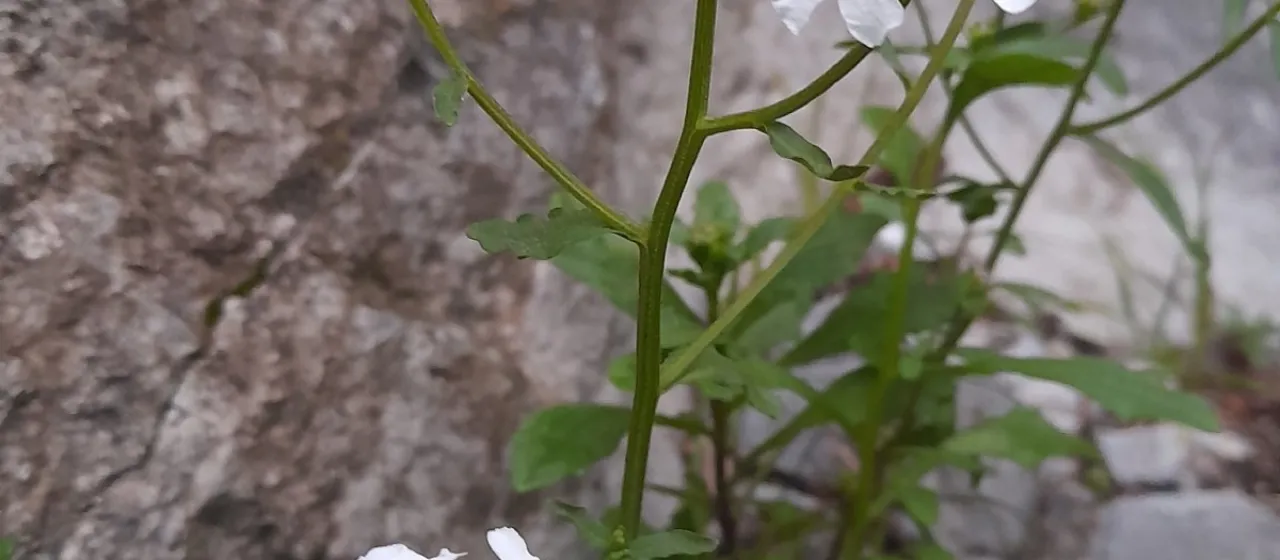
Description
Iberis crenata is a perennial herbaceous plant belonging to the Brassicaceae family. In agriculture and horticulture, this species is highly regarded for its aesthetic value and its ability to act as a resilient ground cover in rocky or poor soil conditions. It is frequently selected for xeriscaping and sustainable landscape design projects.
The plant originates from Southern Europe, primarily inhabiting mountainous and rocky slopes. Because of its native climate, Iberis crenata is well-adapted to high sunlight intensity, low humidity, and relatively thin, well-drained soils. Its evolutionary background makes it an excellent candidate for low-maintenance garden setups.
Botanically, the plant forms low, dense mats of foliage with characteristically crenate (notched) leaves. Its flowers are arranged in compact, corymb-like clusters, typically white or pale shades, which bloom profusely in late spring. This morphology allows the plant to form a uniform, flower-covered surface, which is highly appreciated in garden design.
The agrotechnical requirements for growing this crop center on soil drainage and site selection. Iberis crenata thrives in calcareous, well-aerated soils and requires significant exposure to sunlight to maintain its compact growth habit. It is essential to avoid over-watering, as excessive moisture leads to root rot and other fungal diseases, which are the primary threats to its health.
Economically, the plant is used primarily for ornamental purposes, including borders, rock gardens, and ground cover, though it also serves as a significant source of nectar for pollinators. Common pests include flea beetles, which are typical for the Brassicaceae family. Proper care involves post-bloom pruning to maintain plant shape and prevent the development of woody, unattractive stems.
- Requires well-draining, neutral to alkaline soil.
- Thrives in full sun to light shade.
- Highly drought-tolerant once established.
- Regular pruning stimulates healthier growth.
- Excellent for erosion control on slopes.