
Description
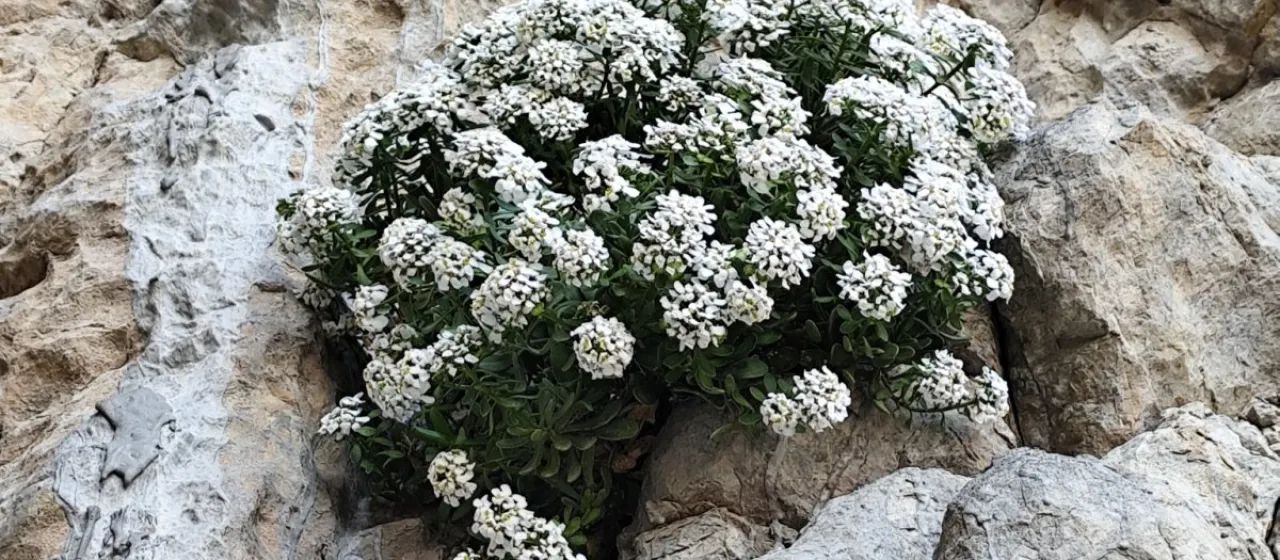
Evergreen candytuft (lat. Iberis semperflorens) is a perennial, evergreen subshrub belonging to the Brassicaceae family. It is highly valued in horticulture for its dense, glossy foliage and its ability to provide structural interest in the garden throughout the year, regardless of the season.
The species is native to the Mediterranean region, including parts of Southern Europe and Northern Africa. It has evolved to thrive in rocky environments and limestone-rich soils, which has resulted in a plant that is remarkably drought-tolerant and requires very little maintenance once established in the garden.
Botanically, the plant forms a compact mound reaching heights of approximately 30 to 40 centimeters. The plant is characterized by its woody base and leathery leaves. During its primary flowering period in spring, the plant is covered in a profusion of white, fragrant blossoms arranged in flat-topped clusters that completely obscure the foliage.
Cultivation requirements focus on providing a site with full sun exposure and excellent soil drainage. It is essential to plant this species in gritty or sandy soil; heavy clay soils that retain excessive moisture are detrimental and often lead to root rot. While it thrives in alkaline soils, it can adapt to neutral conditions provided that drainage is managed effectively.
In terms of garden usage, it is an excellent choice for rock gardens, container planting, and as an edging plant along pathways. Regarding health, the most significant pests include aphids and flea beetles. Disease issues, such as fungal root rots, are almost exclusively linked to poor drainage or overly humid growing environments, making preventative soil management the key to success.