
Description
Idiospermum australiense, commonly known as the Ribbonwood or Green Dinosaur tree, is a rare relict species belonging to the Calycanthaceae family. As one of the most ancient flowering plants, it is often referred to as a living fossil, providing critical insights into the evolution and development of primitive angiosperms dating back to the Cretaceous period.
This species is endemic to a very small area within the tropical rainforests of Queensland, Australia. Due to its status as a highly protected species, it is not cultivated for commercial agricultural purposes. However, it is maintained in specific botanical collections and research centers aimed at conserving endangered and ancient plant lineages found in the Australian tropics.
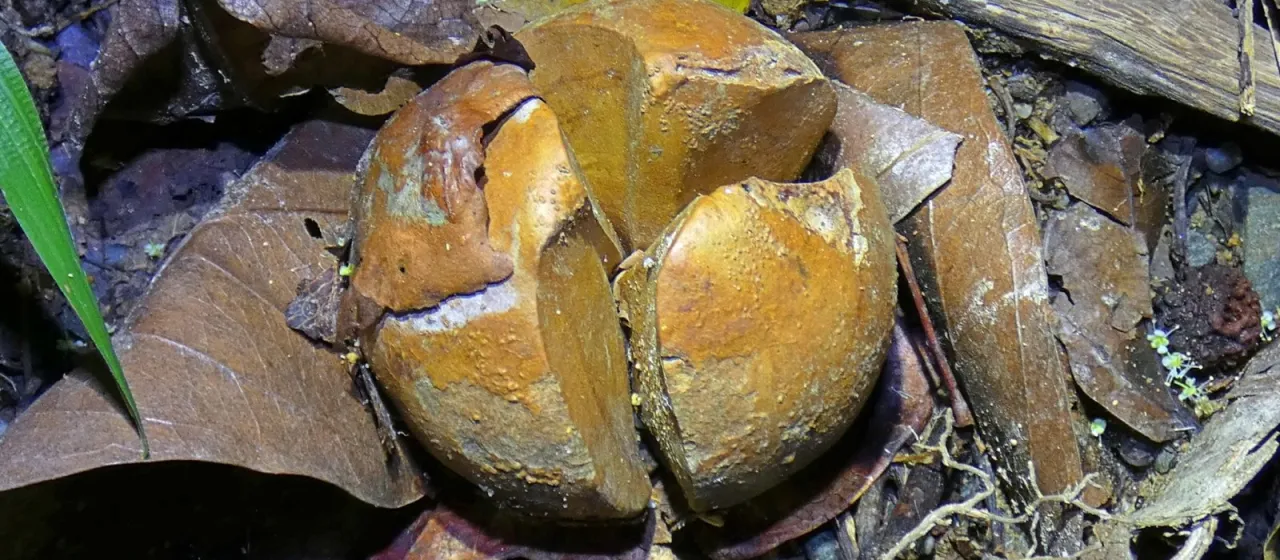
Botanically, it is an evergreen tree that can grow up to 30 meters tall. It is characterized by thick, leathery, opposite leaves and unique, spirally arranged flowers that emit a distinct fragrance. The fruits are large, woody, and contain a single large seed. These seeds are remarkably rich in alkaloids, which have historically been a subject of toxicological and phytochemical research.
Cultivation requirements for Idiospermum australiense are strictly tied to its native rainforest climate. It requires high atmospheric humidity, consistent temperatures, and soil rich in organic matter with excellent drainage. Exposure to direct, intense sunlight can damage saplings, necessitating canopy-like shade structures in controlled environments or greenhouse settings.
Currently, the use of this plant is focused exclusively on botanical conservation and scientific study rather than traditional agriculture. It poses risks due to the toxicity of its seeds, which contain compounds like idiospermine. Pests and diseases are primarily related to tropical fungal pathogens that thrive in stagnant, poorly aerated root zones, requiring careful monitoring of the substrate.