
Description
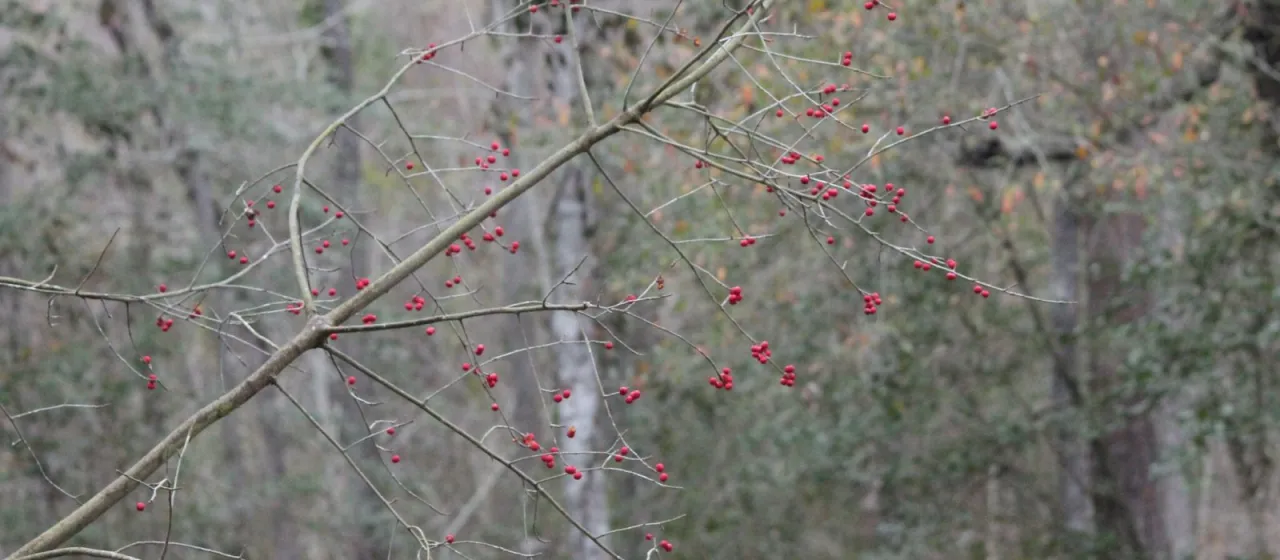
Swamp holly (Ilex amelanchier) is a unique, deciduous shrub species belonging to the Aquifoliaceae family. Unlike many common holly varieties that remain green year-round, this species is noted for its deciduous habit, which gives it a distinct seasonal aesthetic, especially when the bright red fruits remain on bare branches.
The native range of this plant is restricted to the southeastern United States. It naturally thrives in wetland habitats, including forested swamps, riverbanks, and low-lying areas with consistently high moisture levels. This specific ecological adaptation makes the species highly selective regarding its planting environment.
Botanically, the plant grows as an upright, multi-stemmed shrub typically reaching heights of 3 to 4 meters. The foliage is simple and oblong, often with a subtle, leathery texture. During late spring, small, inconspicuous flowers bloom, followed by the development of drupes that serve as a crucial food source for local wildlife, particularly bird populations.
Cultivation of Ilex amelanchier requires careful attention to soil conditions. It demands acidic, organic-rich soil that stays moist throughout the growing season. It is not a drought-tolerant species and will show signs of stress if allowed to dry out completely. Ideally, it should be planted in partial shade to mimic the conditions of the forest floor.
- Requires consistently moist, acidic soil conditions.
- Best grown in partial shade to full shade environments.
- Maintenance includes light pruning to encourage healthy branching.
- Highly valued for its aesthetic appeal in woodland or water gardens.
In terms of agricultural and horticultural utility, swamp holly is primarily utilized for landscape design, particularly in restoration projects or rain gardens. Because of its tolerance for wet feet, it is a rare and valuable asset for gardeners looking to stabilize moist areas of their property while adding seasonal color through its late-persisting red berries.