
Description
Dahoon holly (Ilex cassine) is an evergreen tree or large shrub belonging to the Aquifoliaceae family. Native to the coastal plains and wetlands of the southeastern United States, this species is highly valued for its ability to thrive in damp or poorly drained soils where other ornamental trees might fail. It can reach heights of up to 10 meters in its native habitat, maintaining a dense and lush canopy.
The geographic range of Ilex cassine extends from Virginia to Texas, predominantly inhabiting swamps, marsh edges, and low-lying woods. This distribution highlights its evolutionary adaptation to high water tables and acidic soil environments. Due to these characteristics, it has become a popular choice for restoration projects and garden designs that incorporate natural water features.
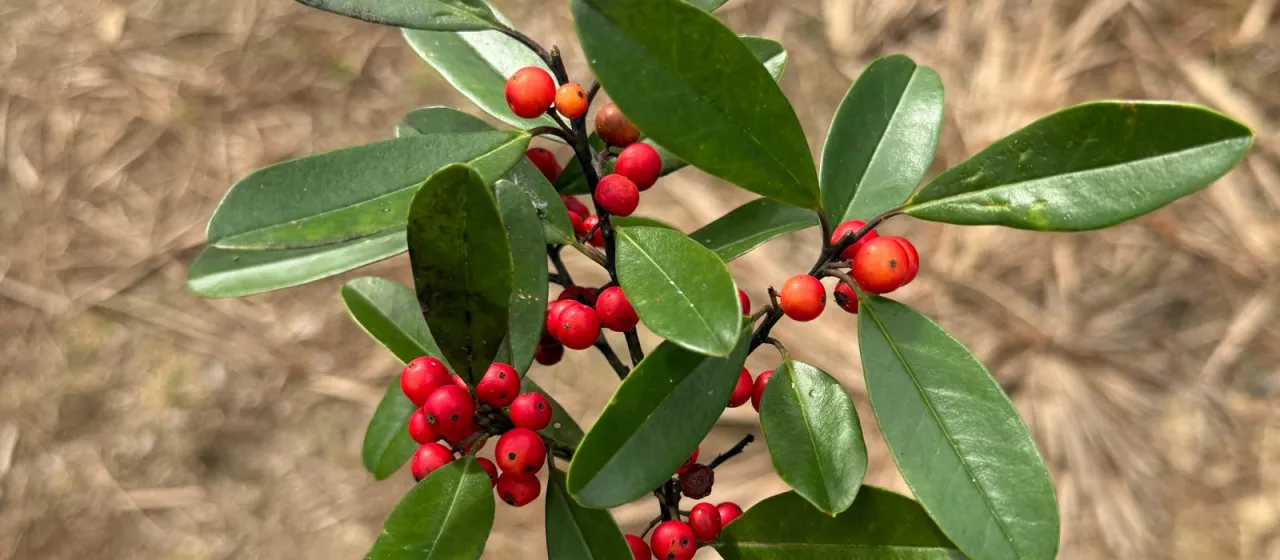
Botanically, the Dahoon holly is dioecious, meaning male and female flowers are borne on separate plants. The foliage is characteristically entire or slightly serrated, deep green, and leathery. During autumn and winter, female specimens display clusters of bright red, persistent drupes. These fruits are not only visually striking but also serve as a critical food source for migratory birds and local wildlife.
Agrotechnical requirements for Ilex cassine focus on maintaining adequate soil moisture. While it prefers moist, organic-rich, acidic soil, it is remarkably versatile and can adapt to varied light conditions ranging from full sun to partial shade. Propagating the species is typically achieved through semi-hardwood cuttings or seeds, though the latter may require stratification to overcome dormancy.
Economically, the plant is widely used in commercial landscape design for screening, hedges, and specimen planting. It is generally robust; however, growers should remain vigilant against common pests such as holly leaf miners, aphids, and scale insects. Maintaining optimal soil pH and ensuring proper airflow within the canopy are the best preventative measures against fungal pathogens like leaf spot.