
Description
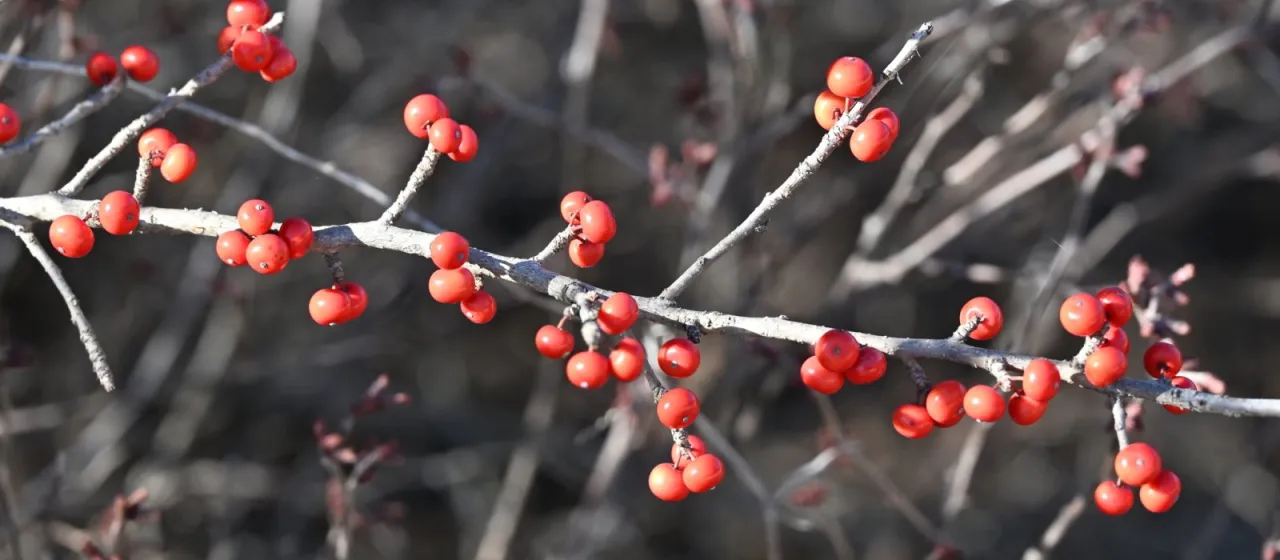
Possumhaw holly (Ilex decidua) is a perennial deciduous shrub or small tree belonging to the Aquifoliaceae family. Unlike many other holly species that remain evergreen, this plant loses its foliage in late autumn, showcasing its striking berry production during the winter months.
The species is native to the southeastern and south-central United States. In the wild, it is typically found in habitats such as floodplains, swampy woods, and moist lowlands. Its ability to tolerate a wide range of moisture levels makes it a versatile species within its native range, preferring soils that do not dry out completely.
Botanically, this shrub grows to a height of 3 to 5 meters, forming an open, upright, or rounded crown. The leaves are simple, alternate, and have a finely serrated edge. The most iconic feature of Ilex decidua is the bright red or orange-red drupes produced on female plants, which persist throughout the dormant season, adding vibrant color to the landscape.
To cultivate this plant successfully, one should provide well-drained but consistently moist soil, preferably with a slightly acidic pH. While it thrives in full sun, it can also tolerate partial shade. Maintenance involves periodic watering during dry spells and light pruning to maintain the desired shape and remove deadwood during late winter or early spring.
- Planting season: early spring or late autumn.
- Soil preference: moisture-retentive, acidic to neutral soil.
- Pest management: generally pest-free, though scale insects may occasionally occur.
- Propagation: by seeds or semi-hardwood cuttings.
The primary use of Possumhaw holly is in ornamental landscaping, where it is utilized as an accent plant or in shrub borders. Its winter beauty makes it highly prized by gardeners, while its berries provide a critical winter food source for various birds, such as mockingbirds and cedar waxwings, supporting local ecosystems.