
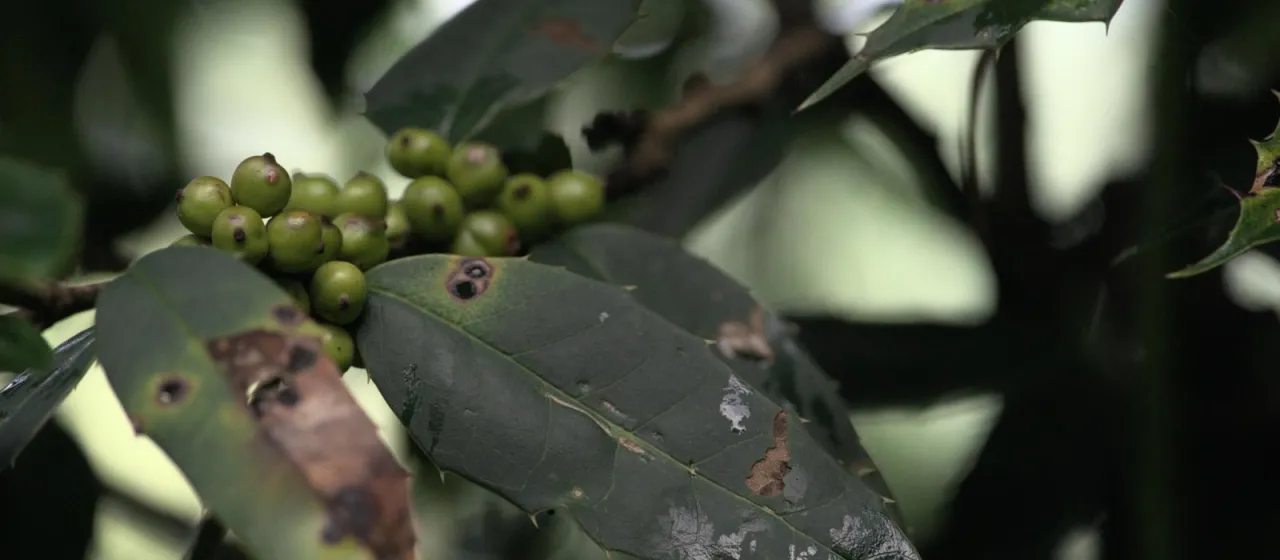
Description
Himalayan holly (Ilex dipyrena) is a prominent evergreen tree species belonging to the Aquifoliaceae family. Known for its distinct growth habit and rich, glossy foliage, it serves as a highly valued ornamental plant in temperate and subtropical climates where it can thrive with minimal maintenance.
The native distribution of this species is centered around the Himalayan mountain ranges, extending through regions of Afghanistan, Pakistan, Northern India, and Western China. As a high-altitude plant, it has evolved to tolerate the specific environmental pressures of mountainous landscapes, including cooler temperatures and variable moisture levels characteristic of high-elevation forests.
Botanically, Ilex dipyrena is recognized by its smooth bark and elliptical, leathery leaves that often lose their spines as the plant matures. The tree produces small, inconspicuous flowers, followed by vibrant red drupes that contain two seeds (pyrenes), which is the primary botanical characteristic that gives this species its unique scientific name.
Agricultural and gardening requirements for this holly include planting in well-drained, fertile soil with a slightly acidic to neutral pH level. It performs best in partially shaded locations, particularly in areas where it is protected from harsh, desiccating winds. Consistent moisture is required, but soil aeration must be maintained to prevent waterlogging, which the plant does not tolerate well.
The primary use for this species is in landscape architecture, utilized as a specimen tree or in formal garden arrangements. Maintaining plant health requires vigilance against common issues:
- Leaf spot diseases caused by high humidity.
- Infestations of scale insects that may weaken the stems.
- Root rot resulting from poor soil drainage or excessive irrigation.