
Description
Illecebrum verticillatum, commonly known as whorled knotweed, is a unique herbaceous plant belonging to the Caryophyllaceae family. As the only species in its genus, it holds a distinct position in botanical classification. While not a primary agricultural crop, it is recognized for its specialized niche in ecological restoration and ornamental horticulture.
The plant originates from the Atlantic regions of Europe and the Mediterranean. Its natural habitat includes damp sandy soils, the margins of ponds, and marshy heaths. It is well-adapted to areas with high humidity and acidic soil conditions, often thriving in environments that are typically too harsh or nutrient-poor for more competitive plant species.
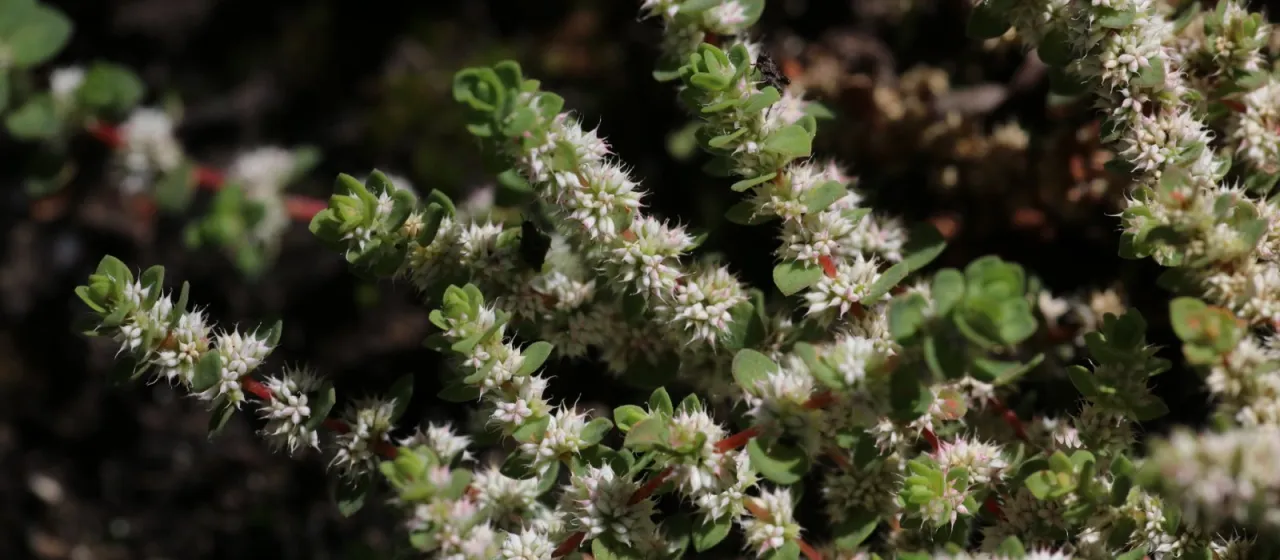
Botanically, it is characterized by its prostrate, branching stems that form dense, low-growing mats. The leaves are small, opposite, and distinguished by prominent scarious stipules. The flowers are tiny and white, arranged in distinct whorls in the leaf axils, which gives the plant its scientific name. This growth pattern allows it to efficiently colonize damp, open ground.
Regarding cultivation requirements, Illecebrum verticillatum prefers light, sandy substrates with acidic to neutral pH levels. Successful growth depends on consistent soil moisture, as the plant possesses a shallow root system that is highly sensitive to desiccation. In an agricultural or garden setting, full sunlight is necessary for optimal development and flower production.
In terms of practical use, the species is primarily employed as a groundcover in specialized landscaping, particularly for moist, acidic borders or bog gardens. Typical threats include fungal infections affecting the roots in poorly drained soils and competition from invasive weeds. Careful management of soil aeration and moisture is essential to maintain the health and vigor of this delicate botanical subject.