
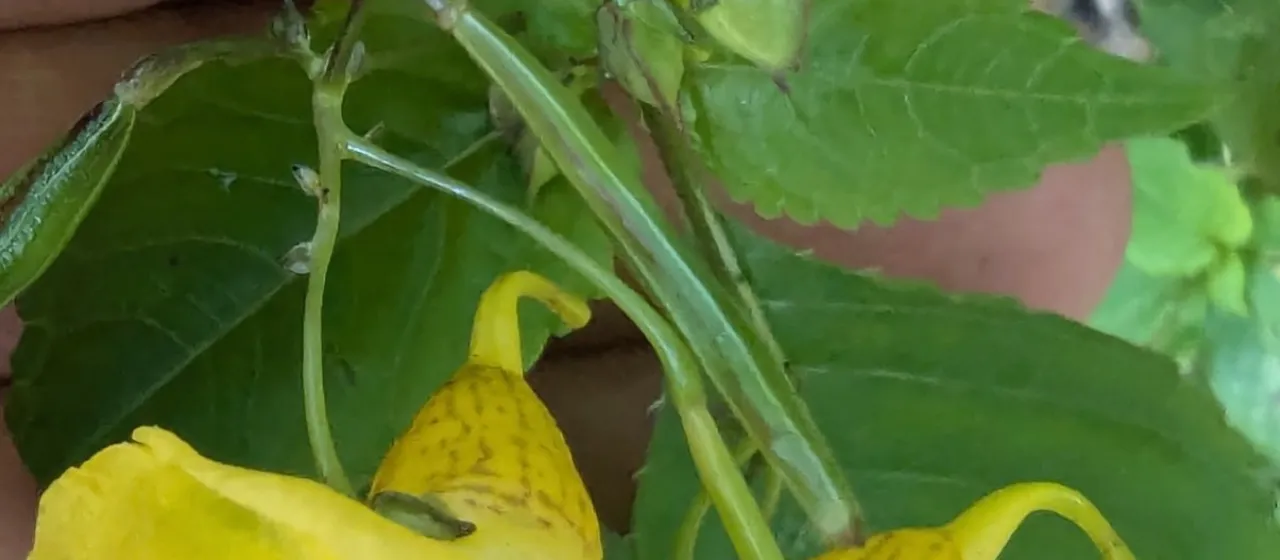
Description
Edgeworth's balsam (lat. Impatiens edgeworthii) is a herbaceous plant belonging to the Balsaminaceae family. It is recognized in horticulture for its ornamental value, particularly for its unique yellow flowers and adaptability to shady environments where other flowering plants might struggle.
The species originates from the Himalayan mountain ranges, spanning regions across India and Pakistan. This geographical background dictates its preference for temperate, humid climates and environments with high atmospheric moisture, reflecting its evolutionary adaptation to mountain forests.
Botanically, the plant is characterized by succulent, brittle stems and distinctive zygomorphic flowers that typically feature yellow hues with contrasting spots. It grows as a bushy perennial or annual, spreading effectively through proper spacing and regular care during the growing season.
Cultivation requirements include rich, loose, and well-drained soil, keeping it consistently moist but not waterlogged. Optimal agrotechnical practices involve placing the plants in partial to full shade to protect the foliage from leaf scorch, as direct sunlight often leads to desiccation.
- Maintain high soil humidity levels
- Provide partial shade protection
- Ensure good air circulation to prevent fungal growth
- Mulch to retain soil moisture
In terms of agricultural and landscape usage, it serves as a specialty ornamental crop. Producers must be vigilant against common threats, such as powdery mildew in poorly ventilated greenhouses and spider mites, which can be particularly damaging in low-humidity conditions.