
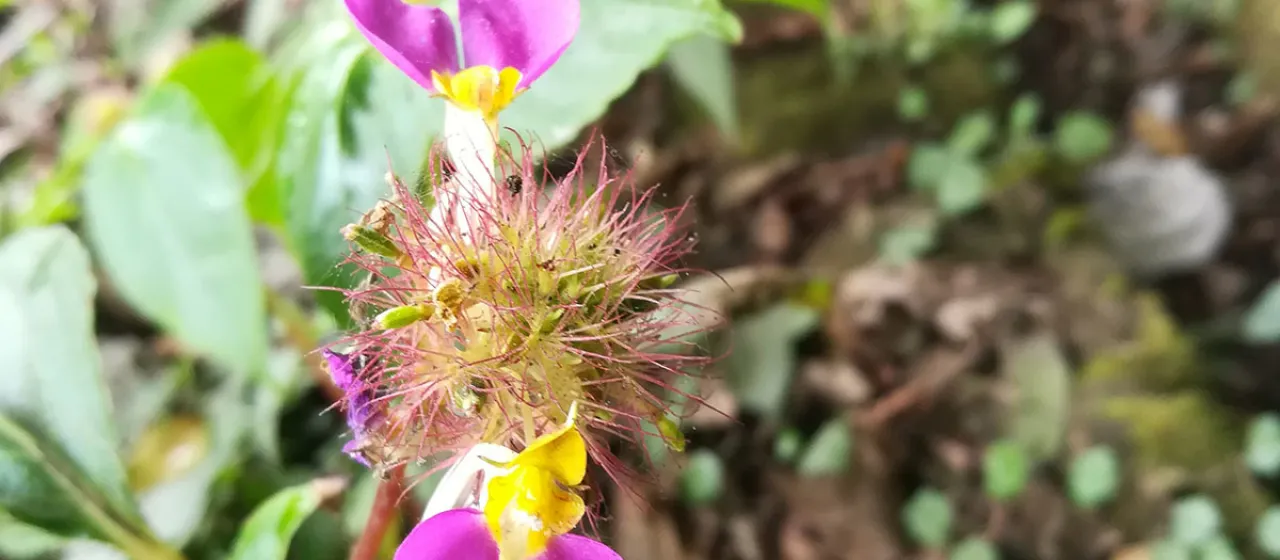
Description
Fringed balsam (Impatiens fimbriata) is a perennial herbaceous plant belonging to the Balsaminaceae family. It is distinct from more common bedding impatiens due to the unique, delicate fringed margins of its petals. This species is primarily cultivated by plant enthusiasts and professional growers who specialize in rare tropical flora.
The species originates from the mountainous tropical forests of East Africa. In its native habitat, it grows in the understory where humidity is high and light is filtered by the forest canopy. Because of its tropical origins, the plant requires specific environmental conditions, making it an ideal candidate for indoor cultivation, conservatories, or climate-controlled greenhouses.
Botanically, Impatiens fimbriata features succulent stems and lanceolate leaves. The flowers are the primary aesthetic feature, characterized by a long nectar spur and deeply laciniated, fringed petal edges. The plant exhibits a spreading growth habit, often requiring pinching to maintain a bushy shape, and relies on a shallow but dense root system to absorb water and nutrients.
Cultivation requirements demand a well-draining, moisture-retentive potting mix rich in organic matter. An ideal pH range is slightly acidic to neutral. Growers must maintain a stable ambient temperature of 18°C–24°C and ensure high humidity. Irrigation should be consistent, ensuring the substrate remains damp but never waterlogged, as the roots are prone to oxygen deprivation and decay if left in standing water.
Regarding its use in agriculture and horticulture, it is valued strictly as an ornamental plant. It requires careful monitoring to prevent common issues such as:
- Infestations of spider mites, which thrive in low-humidity environments.
- Root rot caused by overwatering or poor drainage.
- Powdery mildew, which can occur if leaf surfaces remain wet or airflow is stagnant.