
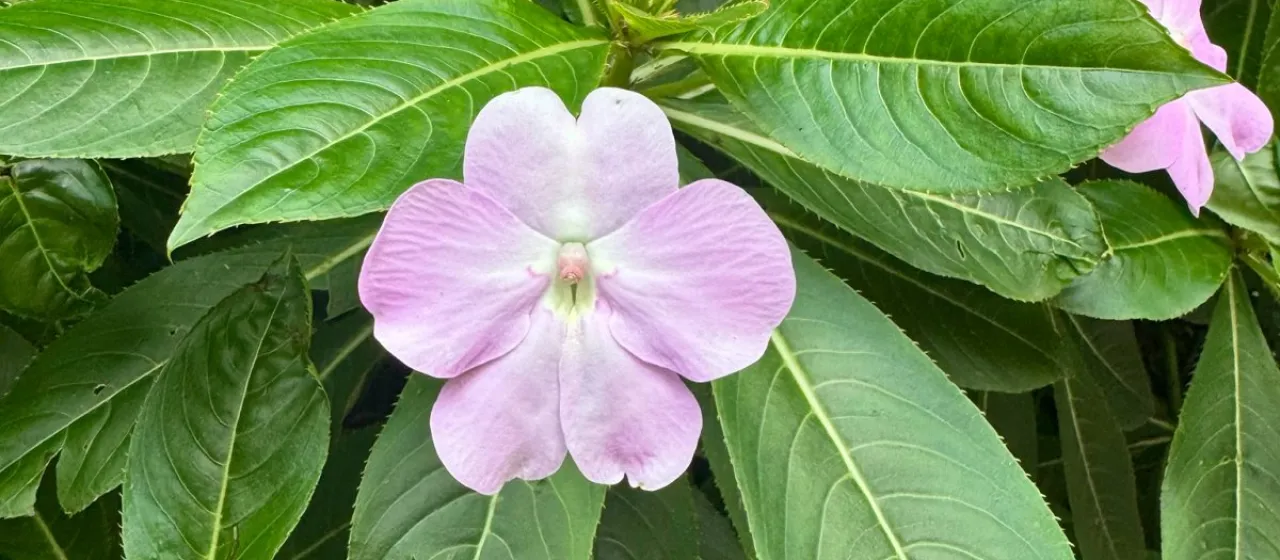
Description
Soden's balsam (Impatiens sodenii) is a perennial herbaceous plant belonging to the Balsaminaceae family. Unlike common garden impatiens, this species is noted for its shrub-like growth habit, which can reach heights of up to two meters. It is a highly valued ornamental plant due to its vigorous growth and abundant floral display.
The plant originates from the tropical mountain regions of East Africa, specifically within Kenya and Tanzania. In its native environment, it thrives under the canopy of moist forests, enjoying moderate temperatures and high humidity. Today, it is widely cultivated across various regions as a perennial shrub in frost-free zones or as a large-container plant for interiors and greenhouses.
Botanically, the plant features succulent stems that gradually become woody at the base. Its leaves are lanceolate, arranged in whorls, and possess a serrated margin. The flowers are particularly notable for their size and elegant appearance, often appearing in shades of white, pink, or lilac, each equipped with a prominent nectar spur characteristic of the genus.
Agricultural requirements for Soden's balsam focus on providing bright, indirect light to prevent leaf scorching. The soil should be fertile, well-draining, and rich in organic matter. Maintaining consistent soil moisture is critical for health; however, waterlogging must be avoided to prevent root asphyxiation. During the growing season, moderate fertilization is recommended to support its rapid development.
Management of the crop requires vigilance regarding specific pests and physiological disorders:
- Spider mites, which often thrive in dry indoor or summer conditions.
- Aphids, which target the soft new growth and developing flower buds.
- Botrytis blight, triggered by poor airflow and excessive leaf wetness.
- Root rot, usually resulting from poor drainage or excessive irrigation during dormancy.