
Description
Indian mulberry (Morinda citrifolia L.), widely known as noni, is a perennial evergreen plant belonging to the Rubiaceae family. This species is native to Southeast Asia and Australasia and has been cultivated for centuries in tropical regions for its significant medicinal and nutritional properties, which have made it a popular commodity in global markets.
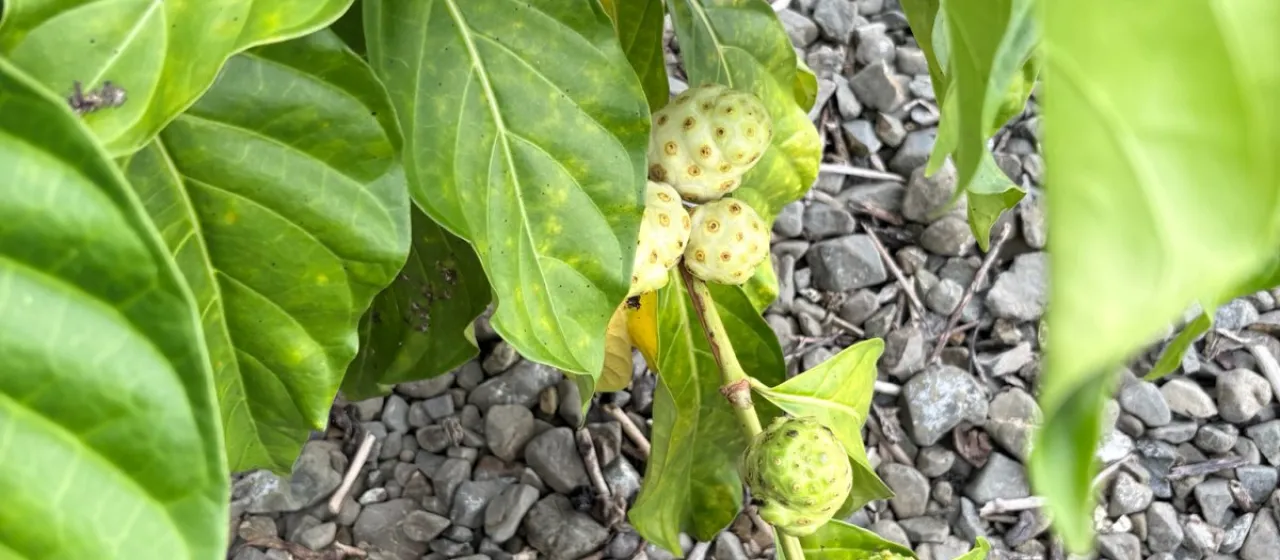
The plant grows as a small tree or shrub, typically reaching heights of 3 to 10 meters. Its foliage is deep green, glossy, and broadly elliptic. The flowers are small and white, appearing in clusters, while the fruit is a multiple fruit that develops a distinct, pungent odor and a lumpy, pale yellow-green exterior upon maturation.
Agronomically, the Indian mulberry is remarkably hardy. It thrives in tropical climates with temperatures consistently ranging from 20 °C to 35 °C. It is highly adaptable to various soil types, including sandy, clay, and volcanic soils. It even displays a high level of salt tolerance, making it suitable for coastal cultivation where other crops might struggle.
Cultivation practices involve selecting a sunny location with well-drained soil. Propagation is usually achieved through seeds or stem cuttings. While the plant is drought-tolerant once established, regular irrigation during the initial stages of growth is essential for optimal development. Pruning is recommended to maintain the plant's size, promote canopy health, and facilitate the harvesting of the fruits.
Regarding pest and disease management, the noni plant is susceptible to common tropical pests such as aphids, scale insects, and mealybugs. These can be managed through biological control or integrated pest management strategies. Root rot and fungal leaf spots are the most prevalent diseases, primarily caused by poor drainage or excessive humidity, which necessitates careful site selection and soil preparation.