
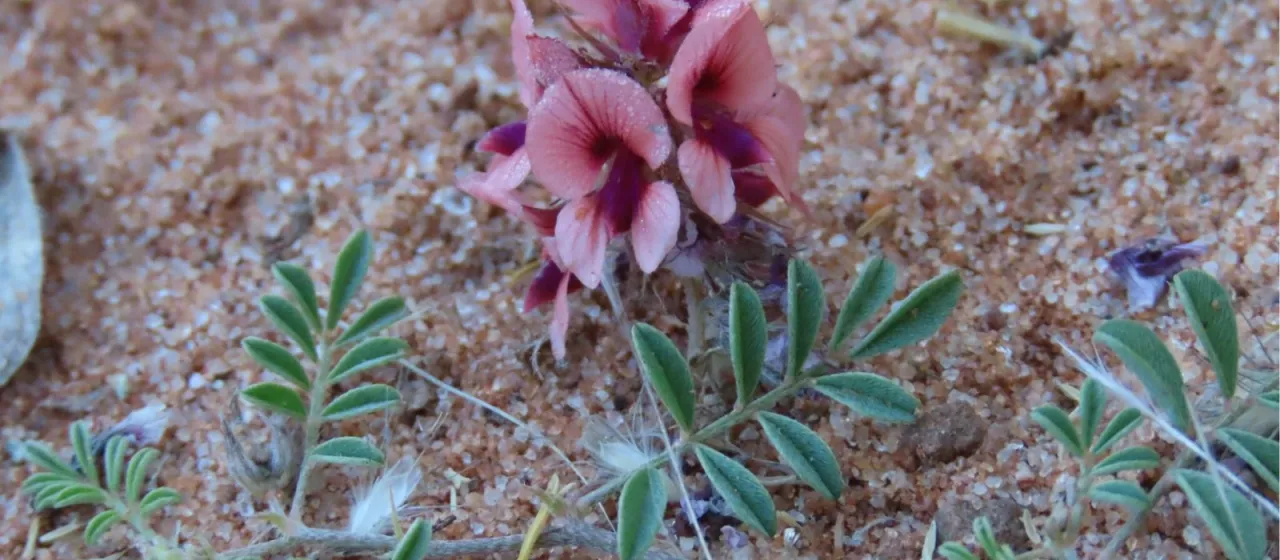
Description
Indigofera alternans is a perennial leguminous plant belonging to the family Fabaceae. This species is recognized for its remarkable resilience and ecological importance in arid environments. As a member of the legume family, it possesses the natural ability to fix atmospheric nitrogen, contributing significantly to soil enrichment and ecological sustainability.
The plant originates from the arid regions of Southern Africa. Its natural distribution encompasses environments characterized by low rainfall and poor soil quality. Due to its evolutionary adaptation to harsh conditions, the plant has become a subject of interest for agricultural systems seeking to restore degraded lands and improve forage options in dry climates.
Botanically, Indigofera alternans is a semi-shrub or herb with alternating leaves, which gives the plant its specific name. It is distinguished by a strong, deep-reaching taproot system designed to extract water from deep soil profiles. This morphological adaptation allows the plant to remain green and productive even during prolonged droughts when other plants wither.
Agricultural requirements for this species are specific, favoring well-drained, sandy, or light-textured soils. It thrives in warm temperatures and requires full sun exposure to achieve optimal biomass production. Proper site selection is crucial, as the plant does not tolerate waterlogging, which often leads to the development of root diseases.
The primary agricultural and environmental uses for Indigofera alternans include:
- Providing high-protein forage for livestock in dryland grazing systems.
- Stabilizing sandy soils to prevent erosion and land degradation.
- Serving as a nitrogen-fixing cover crop to improve soil fertility in regenerative farming practices.
In terms of plant health, Indigofera alternans may be susceptible to various root-rotting fungi if exposed to excessive soil moisture. Insect pests, common among wild and cultivated legumes, can impact foliage development. Management strategies involve strategic irrigation practices, crop rotation, and regular monitoring to ensure plant vigor and minimize the reliance on chemical pest controls.