
Description
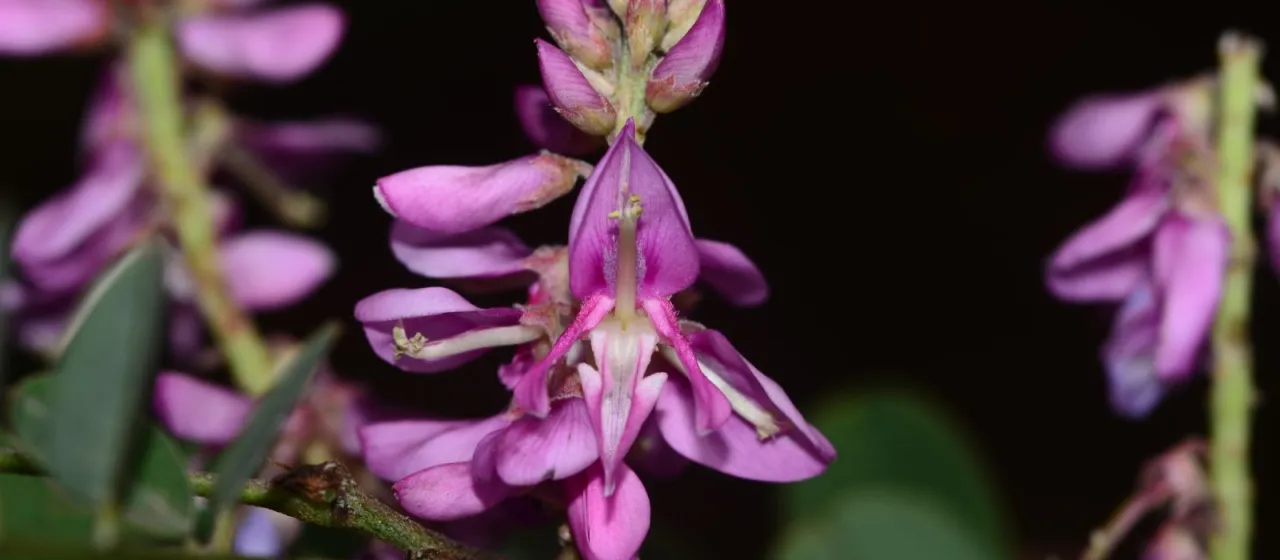
Indigofera cassioides is a perennial deciduous shrub belonging to the Fabaceae family. Known for its elegant appearance, this plant produces graceful, pinnate foliage and striking racemes of pink-purple flowers. It typically grows as an upright, slender shrub, reaching heights of up to two meters in favorable conditions, making it a favorite for ornamental landscaping.
The native habitat of this species stretches across the Himalayan regions and Southeast Asia, including parts of India and Myanmar. It thrives in open woodlands and on sunny hillsides, demonstrating a natural ability to adapt to varying light conditions and moderate environmental stress, which makes it a versatile choice for gardens in similar climatic zones.
Botanically, the plant is characterized by its nitrogen-fixing capabilities, forming symbiotic relationships with bacteria in its root system. This biological trait allows the shrub to contribute to soil enrichment. The flowers, which bloom primarily during the summer months, are arranged in long, dense clusters that provide significant visual interest and support local pollinator populations.
For optimal growth, Indigofera cassioides requires well-drained soil with a slightly acidic to neutral pH. It is a sun-loving plant that prefers sheltered locations protected from harsh, cold winds. While it shows good tolerance to heat and short periods of drought once established, consistent soil moisture during the initial growing season is crucial for building a strong root structure.
In terms of хозяйственное usage, the plant serves as a valuable ornamental specimen, but its importance extends to soil conservation through nitrogen fixation. It is often used in ecological restoration projects or as a companion plant in forest gardening. Potential pests include aphids, and growers should monitor for common fungal issues like powdery mildew in humid environments.
- Striking ornamental floral display.
- Soil improvement through nitrogen fixation.
- Support for biodiversity and pollinators.
- Low maintenance requirements once established.