
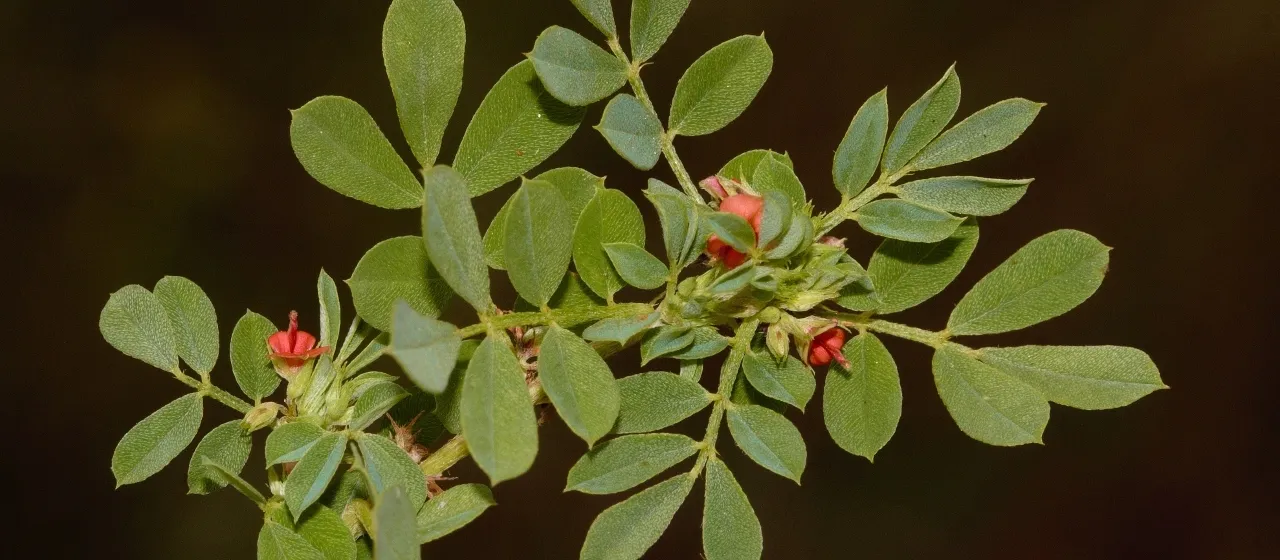
Description
Indigofera demissa is a perennial herbaceous plant belonging to the large legume family, Fabaceae. As a member of the genus Indigofera, this species is recognized for its adaptation to arid and semi-arid environments. It serves as a significant biological model for studying drought resistance and nitrogen fixation capabilities within the leguminous plant group.
The native range of Indigofera demissa is concentrated in the dry regions of Africa, where it has evolved to thrive in soils that are often nutrient-poor. Its historical distribution has been dictated by the necessity of surviving high thermal loads and irregular rainfall patterns. Currently, research into its cultivation focuses on restoring land fertility and supporting sustainable agriculture in degraded climatic zones.
Botanically, the plant is characterized by a strong taproot system that allows for deep soil moisture extraction. The foliage is typically compound and covered in fine hairs, an evolutionary mechanism to reduce water loss. The flowers are arranged in racemes and exhibit the typical morphology of subfamily Faboideae. Seeds are enclosed in pods, which are highly resilient, ensuring the plant's survival through dormant periods.
Agricultural requirements for Indigofera demissa include well-drained, sandy or loamy soils and direct sunlight. It is highly sensitive to waterlogging, making proper soil preparation essential. When managed correctly, the plant forms a symbiotic relationship with specific soil bacteria, converting atmospheric nitrogen into a plant-available form, which significantly reduces the need for synthetic nitrogen fertilizers.
Hostile use and agricultural applications include:
- Provision of protein-rich forage for livestock in semi-desert areas.
- Improvement of soil structure through root penetration and organic matter accumulation.
- Prevention of soil erosion in areas prone to desertification.
- Utilization as a nitrogen-fixing cover crop in rotation systems.
Common issues facing Indigofera demissa include fungal infections such as root rot, which are often exacerbated by poor field drainage. Pests such as leaf-eating caterpillars and various beetle species can also impact yield. Integrated pest management, including regular crop rotation and biological control methods, is recommended to maintain healthy stands and ensure sustainable production cycles.