
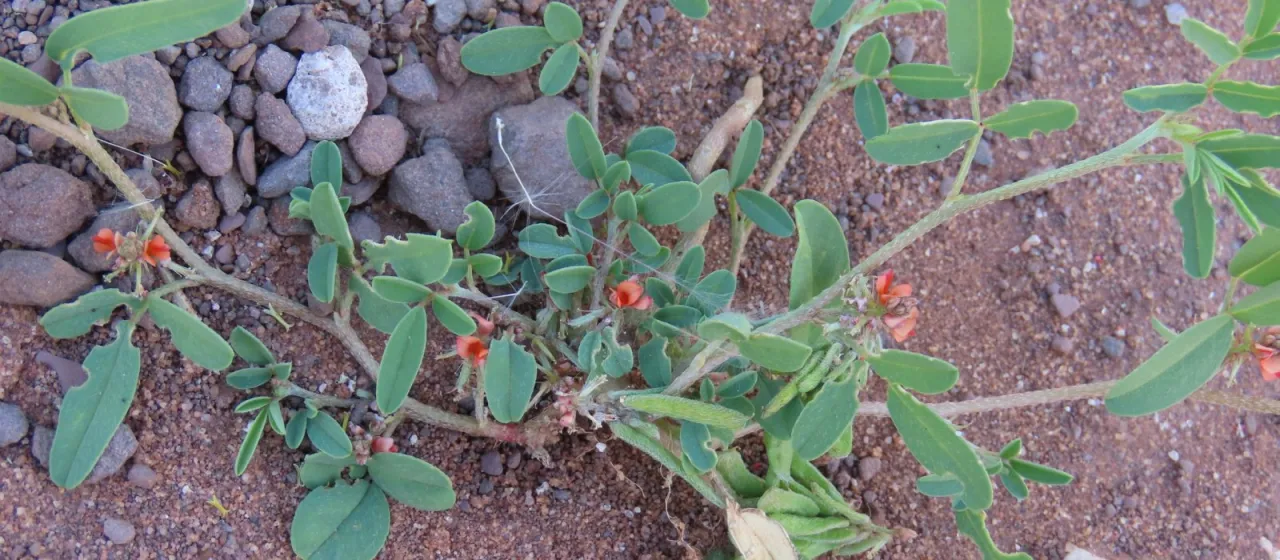
Description
Indigofera hochstetteri is a perennial herbaceous plant belonging to the diverse family Fabaceae. This species is native to arid and semi-arid environments, demonstrating significant evolutionary adaptations to drought and nutrient-poor soils. It is recognized for its role in maintaining ecological balance and its potential as a low-input agricultural crop.
The plant originates from the arid regions of Africa and parts of South Asia. It typically thrives in savanna-like climates where environmental stressors, such as high heat and limited rainfall, are prevalent. Its presence in these regions highlights its utility in rehabilitating degraded lands and controlling soil erosion in fragile agricultural systems.
Botanically, the plant presents a branching growth habit, often reaching a height of 30 to 50 centimeters. It features pinnate, pubescent leaves that act as a protective barrier against moisture loss. During its growing season, it produces small inflorescences that develop into pods, typical of its taxonomic family, facilitating efficient seed dispersal.
Regarding agronomic requirements, Indigofera hochstetteri thrives in well-drained sandy or loamy soils. It is particularly sensitive to waterlogging, which can compromise its root health and biological activity. Due to its nitrogen-fixing capabilities, it does not require high levels of nitrogen fertilization, making it a sustainable choice for systems aiming to reduce chemical inputs.
The main areas of хозяйственного application include:
- Serving as a supplemental forage source in arid grazing lands.
- Acting as a ground cover plant to stabilize soil structure.
- Providing natural nitrogen enrichment to depleted agricultural plots.
- Utilizing it in environmental conservation projects to prevent desertification.
While relatively hardy, the plant can be susceptible to common legume pests and fungal infections, particularly if stagnant water is present in the field. Effective management involves regular field scouting and ensuring proper soil drainage, which remain the most critical factors for successful cultivation of this species in semi-arid zones.