
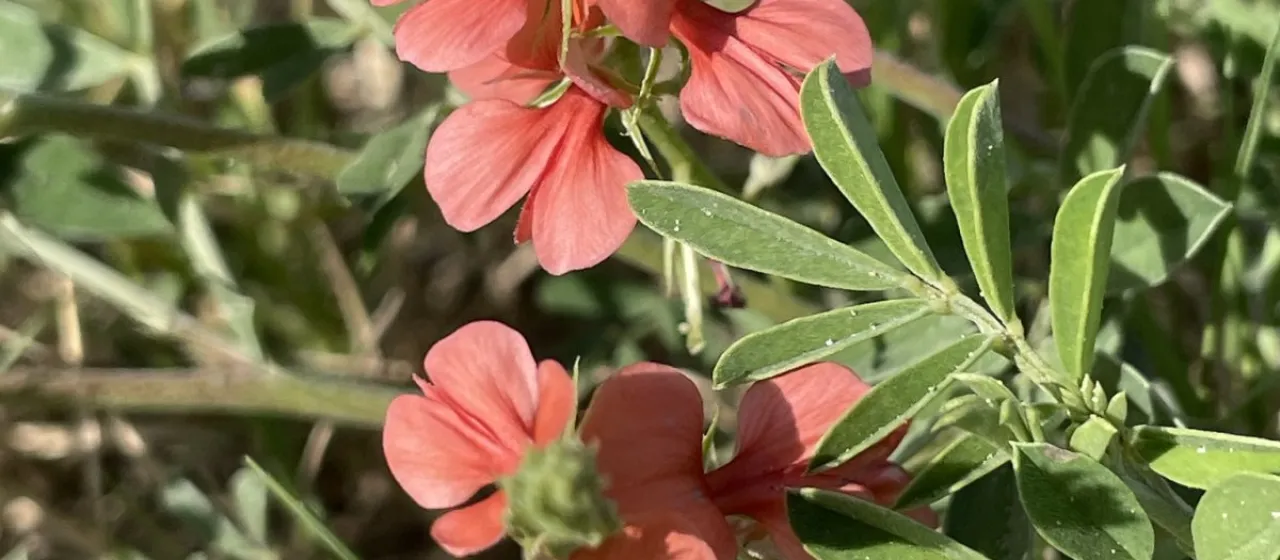
Description
Scarlet indigo (Indigofera miniata) is a perennial herbaceous plant belonging to the large legume family (Fabaceae). It is recognized for its ecological utility, particularly its nitrogen-fixing capabilities, which help enhance soil fertility and support the restoration of nutrient-poor habitats in its native range.
The species is primarily native to North and Central America, with significant populations found across the southeastern United States. It naturally thrives in open, sandy environments such as prairies, pinelands, and disturbed sites, exhibiting a strong capacity to adapt to harsh, sun-drenched, and well-drained conditions.
Botanically, this plant is characterized by its prostrate or ascending stems that sprawl along the ground, creating a protective vegetative cover. The leaves are pinnately compound, and the plant produces attractive, small, bright reddish-orange or rose-colored flowers arranged in racemes, which provide a distinct aesthetic and biological profile.
Agricultural requirements for Indigofera miniata emphasize the need for well-drained, sandy or gravelly soils with low to moderate nutrient levels. The plant is drought-tolerant once established and does not require intensive irrigation, although initial weed control is essential until the plant forms a sufficient ground cover to outcompete opportunistic vegetation.
The primary agricultural use for this plant involves soil conservation, erosion control, and sustainable land restoration projects. Because of its symbiotic relationship with rhizobia bacteria, it contributes to nitrogen accumulation in the soil, making it a viable candidate for low-input regenerative farming and as a forage source in managed wildlife habitats.
While the plant is generally hardy and resistant to many environmental stresses, it can be susceptible to specific pests and pathogens common to the legume family, which may require monitoring:
- Root rot pathogens that proliferate in poorly drained, waterlogged soils.
- Aphid infestations that target tender foliage and flowering stalks.
- Leaf spot diseases, especially during periods of high humidity and limited airflow.