
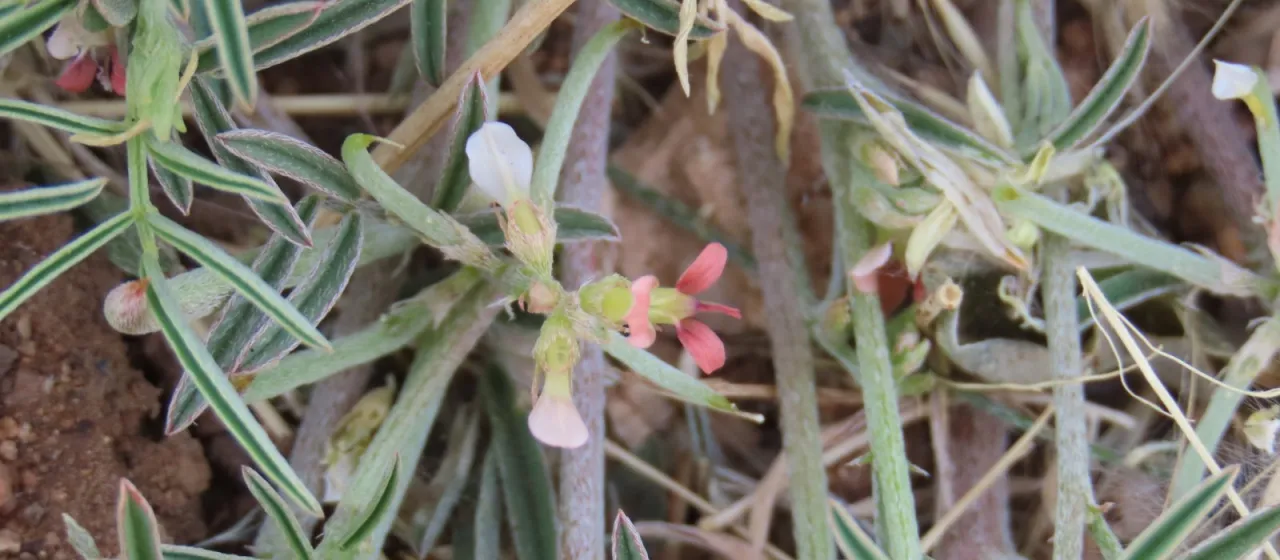
Description
Indigofera parviflora, commonly known as small-flowered indigo, is a leguminous plant species belonging to the family Fabaceae. This plant is recognized for its adaptability to challenging environmental conditions and its significant role in sustainable agriculture, particularly in tropical and arid climates.
The plant originates from Africa and has a natural distribution spanning various arid and semi-arid regions. It has been successfully introduced to parts of Asia and Australia, where its resilience to heat and drought makes it an excellent candidate for land reclamation and soil stabilization projects.
Botanically, it is characterized by pinnate leaves and small, often reddish-purple flowers that grow in racemes. Its root system is particularly notable for forming nodules that fix atmospheric nitrogen, significantly contributing to the improvement of soil nutrient levels without the need for synthetic fertilizers.
In terms of agricultural requirements, the crop thrives in well-drained, light-textured soils such as sand or sandy loam. It requires full sunlight to achieve optimal growth and is highly sensitive to waterlogging, which can lead to rapid decay of the root system and plant mortality.
- Use as high-protein forage for livestock.
- Application as a green manure to boost soil nitrogen.
- Utilization in soil conservation to prevent erosion.
While the plant is hardy, it is susceptible to specific pests, including various beetles and lepidopteran larvae that target leguminous foliage. Fungal pathogens, particularly those causing root rots, can become problematic in areas where high humidity is combined with poor soil drainage, necessitating careful site selection.