
Description
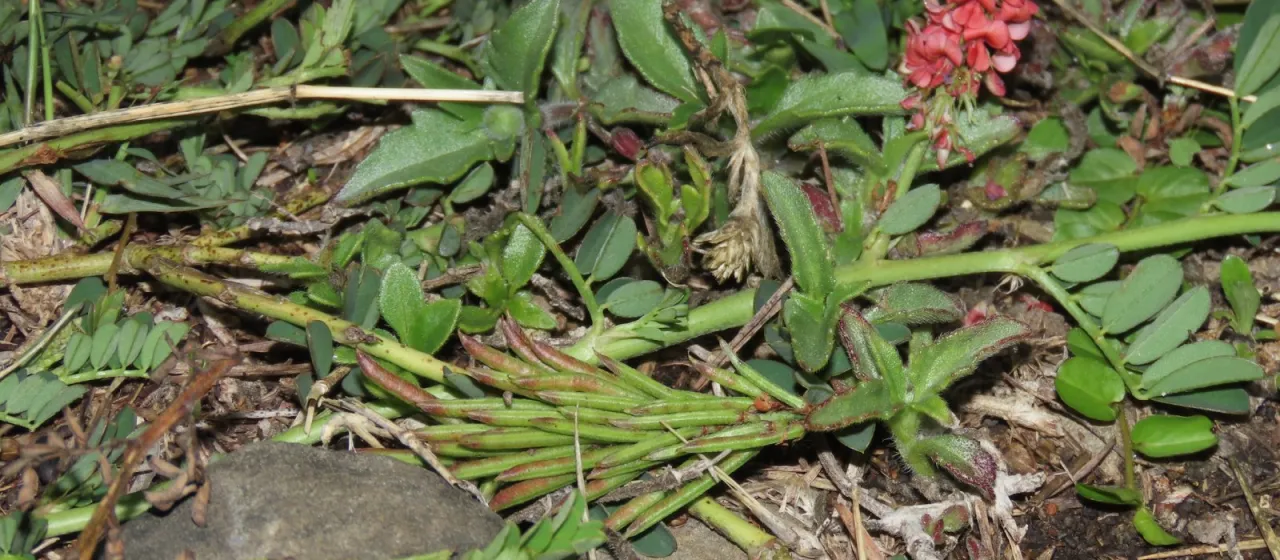
Creeping indigo (Latin: Indigofera spicata) is a perennial leguminous herb belonging to the Fabaceae family. Known for its prostrate growth habit, this plant acts as an efficient ground cover, spreading rapidly across soil surfaces to provide extensive vegetative protection.
Originating in tropical Africa, the plant has become widespread across various tropical and subtropical regions worldwide. Its natural habitat includes grasslands and disturbed areas where it successfully competes with other vegetation, thriving under consistent warm temperatures and adequate moisture levels.
The plant features pinnate leaves and small, dense inflorescences that give it its specific common name. Its biological strength lies in its extensive root system, which not only anchors the plant firmly in the ground but also establishes a symbiotic relationship with nitrogen-fixing bacteria, significantly improving the soil's nutrient profile.
Regarding its cultivation, Indigofera spicata requires full sun exposure and prefers well-draining soil types. It is highly sensitive to frost, which limits its commercial cultivation to frost-free zones. Proper field management requires periodic monitoring to prevent the plant from becoming an invasive weed, as its aggressive growth can easily overwhelm native species or adjacent crops.
In agriculture, the primary use of creeping indigo is as a cover crop and a green manure source. By preventing soil erosion on slopes, it plays a vital role in sustainable land management. However, agronomic experts emphasize that farmers must be cautious; the plant is known to contain toxic compounds like indospicine, which can be harmful to livestock if consumed in large quantities, necessitating careful pasture management.
Typical agricultural challenges include fungal infections during humid seasons and infestation by various foliage-eating insects. Effective control strategies involve maintaining proper field sanitation and avoiding continuous planting in the same area to prevent the buildup of soil-borne pests and pathogenic fungi.