
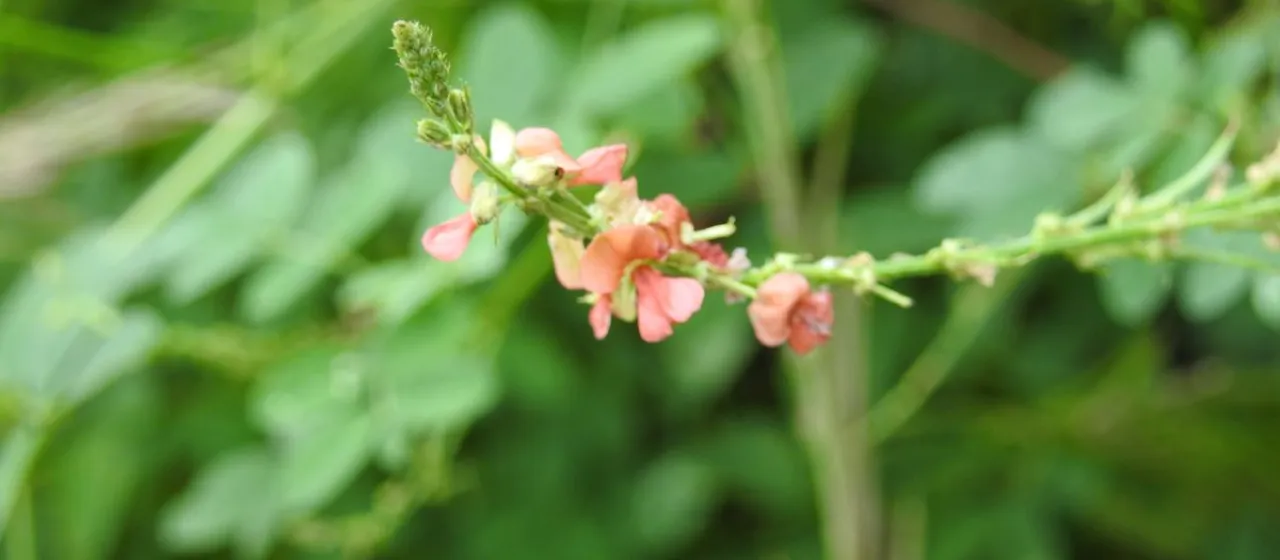
Description
Indigofera subulata is a perennial plant species belonging to the Fabaceae family. It is widely recognized in tropical and subtropical agriculture for its significant role in soil improvement and biomass production. As a legume, it forms a symbiotic relationship with nitrogen-fixing bacteria, contributing substantially to soil fertility.
Native to Africa, this species has been introduced to various tropical regions across Asia and the Americas. Its natural range reflects its ability to thrive in warm climates, often colonizing disturbed sites or being integrated into managed agro-ecosystems where it serves as both a cover crop and a soil builder.
Botanically, the plant is characterized by its woody or semi-woody stems, compound pinnate leaves, and small, distinctively arranged flowers. The fruit consists of linear pods that protect the seeds, allowing for effective dispersal and propagation. The plant's root architecture is highly developed, which aids in water uptake and nutrient cycling.
The cultivation of Indigofera subulata requires well-drained soil and consistent access to sunlight. It is relatively drought-tolerant once established but performs optimally in regions with regular rainfall. Agronomic management involves site preparation, controlled sowing, and periodic cutting to stimulate vegetative regeneration and prevent excessive woody growth.
The primary agricultural applications of this plant include:
- Utilizing as a green manure to boost nitrogen levels in agricultural fields.
- Serving as a protein-rich forage option for grazing livestock.
- Acting as a ground cover to mitigate soil erosion on slopes.
- Suppression of competitive weeds in plantation inter-rows.
Like many legumes, it is susceptible to various fungal pathogens under high humidity conditions, such as leaf spot diseases. Common pests include pod-boring insects and foliage-feeding caterpillars. Implementing integrated pest management (IPM) strategies, including crop rotation and the use of resistant varieties, is essential for maintaining healthy and productive stands.