
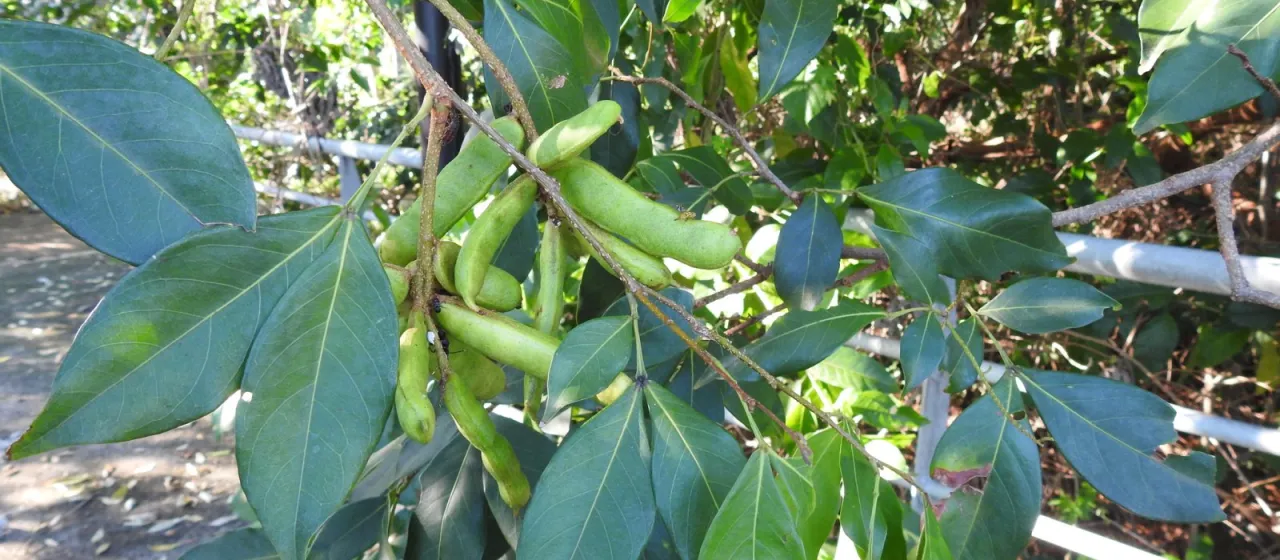
Description
Inga laurina, commonly known as the Guama tree, is a species of flowering plant in the Fabaceae family. This evergreen tree is highly valued in tropical landscapes for its rapid growth, dense canopy, and its ability to thrive in poor soil conditions. It typically reaches heights of 10 to 15 meters and is recognized by its pinnate, leathery leaves that resemble those of the bay laurel.
The native range of Inga laurina spans across the Caribbean, Mexico, and Northern South America. It is a dominant species in various tropical habitats, ranging from wet lowland forests to riparian zones. Its adaptability has made it a preferred choice for reforestation efforts and climate-resilient agricultural systems throughout its native range.
Botanically, the tree is distinct for its white, pom-pom-like inflorescences and long, flattened pods. The pulp surrounding the seeds within the pods is edible, sweet, and succulent. Like other members of the genus Inga, this tree acts as a powerful nitrogen-fixing agent, converting atmospheric nitrogen into a form accessible to other plants, which makes it an ecological cornerstone in mixed-crop plantations.
Regarding cultivation requirements, Inga laurina prefers well-drained, fertile soils, although it is remarkably tolerant of varying soil acidity. It demands a tropical environment with high, consistent rainfall and no exposure to frost. When planting, providing adequate space is essential to accommodate its spreading crown, and young saplings benefit from protection against intense direct sun until they are established.
Its primary agricultural use is as an "alley cropping" or shade tree in coffee and cacao plantations, where it mitigates harsh light and improves soil health. Beyond its agricultural utility, the tree provides high-quality firewood and biomass for mulch. The edible pulp is also locally consumed, and the tree serves as an important honey source for apiaries in tropical regions.
Key pests and potential health issues include:
- Mealybugs and scale insects that cluster on young shoots.
- Fungal leaf spots and anthracnose under high-humidity conditions.
- Stem borers which can weaken mature trunks if the trees are not properly managed.