
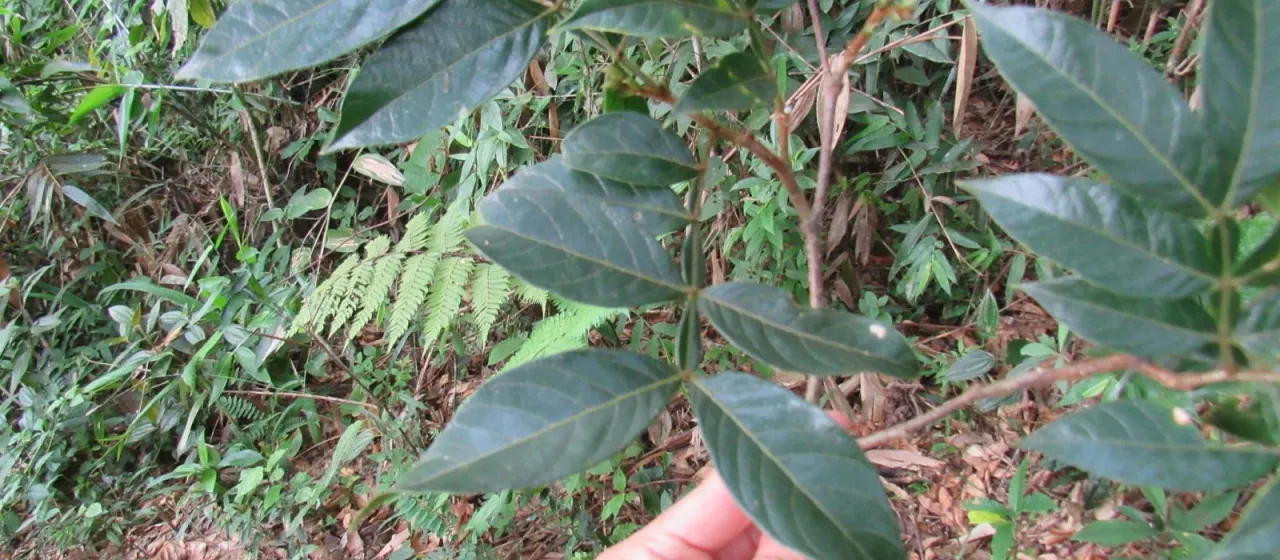
Description
Inga striata is a perennial evergreen tree belonging to the Fabaceae (legume) family. Known for its rapid growth and dense canopy, it has become an essential species in tropical agroforestry, particularly valued for its role in maintaining soil health and providing structural support to other perennial crops.
The native range of Inga striata encompasses the tropical rainforests of Central and South America. Historically, this species has been widely utilized by indigenous communities and farmers for its ability to thrive in diverse environments, from lowland tropical areas to higher elevations, provided the climate remains consistently warm and humid.
Botanically, the tree is characterized by its paripinnate leaves and distinct white, brush-like inflorescences. The fruit consists of long, green pods containing seeds enveloped in a white, sweet, fleshy pulp. This pulp is edible and serves as a minor food source, while the pods themselves are a hallmark of the genus Inga.
Regarding climate and soil requirements, the species favors deep, well-draining soils and does not tolerate waterlogging. Its most notable agronomic attribute is its nitrogen-fixing capacity, which allows it to thrive in nutrient-poor soils. The standard agricultural practice involves pruning the canopy annually to recycle nutrients back into the soil through leaf litter decomposition.
The primary agricultural applications of Inga striata include:
- Providing shade for shade-grown crops like coffee and cocoa.
- Improving soil fertility through biological nitrogen fixation.
- Serving as a source of green manure for sustainable farming practices.
- Providing edible pulp for local consumption and biomass for fuel.
Common phytosanitary concerns include fungal infections of the roots if the drainage is inadequate, and infestations by defoliating insects during dry seasons. Integrated pest management, combined with appropriate pruning cycles to ensure good airflow within the canopy, is generally sufficient to maintain healthy and productive stands.