
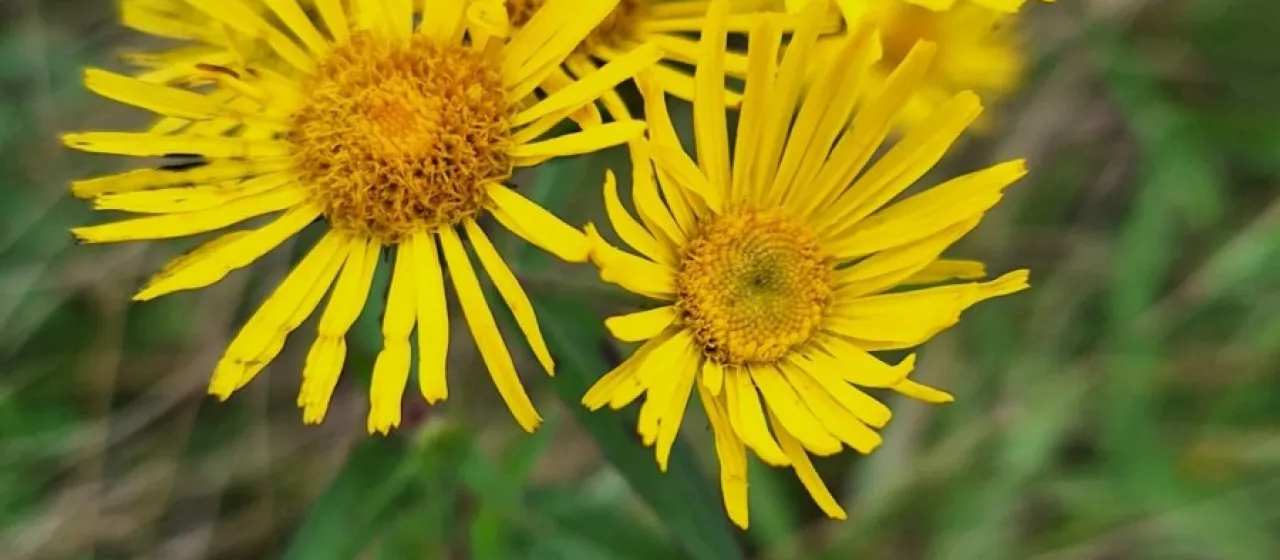
Description
Japanese inula (Inula japonica) is a perennial herb belonging to the Asteraceae family. This species is widely recognized for its botanical significance and potential as a medicinal crop. Unlike some of its larger relatives, it is characterized by specific floral structures and adaptations to moist environments, making it a unique subject for agricultural research.
The native range of Japanese inula includes various parts of East Asia, notably Japan, China, and Korea. In its natural habitat, it thrives in meadows, along riverbanks, and in partially shaded forest margins. As an agricultural crop, it is adapted to temperate climates where there is adequate precipitation during the primary growing season, ensuring robust vegetative development.
Botanically, Japanese inula features a stout, rhizomatous root system and stems that can reach nearly one meter in height. The foliage is typically lanceolate and pubescent. During the flowering phase, it produces bright yellow daisy-like heads that are characteristic of the Asteraceae family. The root system is the primary part utilized for economic purposes, accumulating significant amounts of inulin.
To ensure high yields, farmers must provide fertile, loamy soil with excellent moisture retention capabilities. The plant requires consistent irrigation during the peak of the summer heat to prevent stunted growth. Weeds should be managed strictly during the first year of establishment to ensure the crop has sufficient access to light and nutrients. Regular organic soil amendments are recommended to maintain high levels of productivity.
The primary use of Japanese inula lies in the pharmacological sector, where its extracts are valued for their bioactive components.
- Harvesting should take place in late autumn when the plant's energy is stored in the roots.
- Drying must be performed in well-ventilated areas to prevent mold.
- Common pests include aphids and mites that infest the foliage.
- Fungal infections are the most frequent threat, often associated with poor drainage.